Nautical cozy mysteries transport readers to seaside towns, cruise ships, and coastal communities where murder disrupts the tranquil ocean setting. These lighthearted whodunits combine the charm of small-town mysteries with maritime backdrops, featuring amateur sleuths who solve crimes while surrounded by sea breezes and harbor gossip.
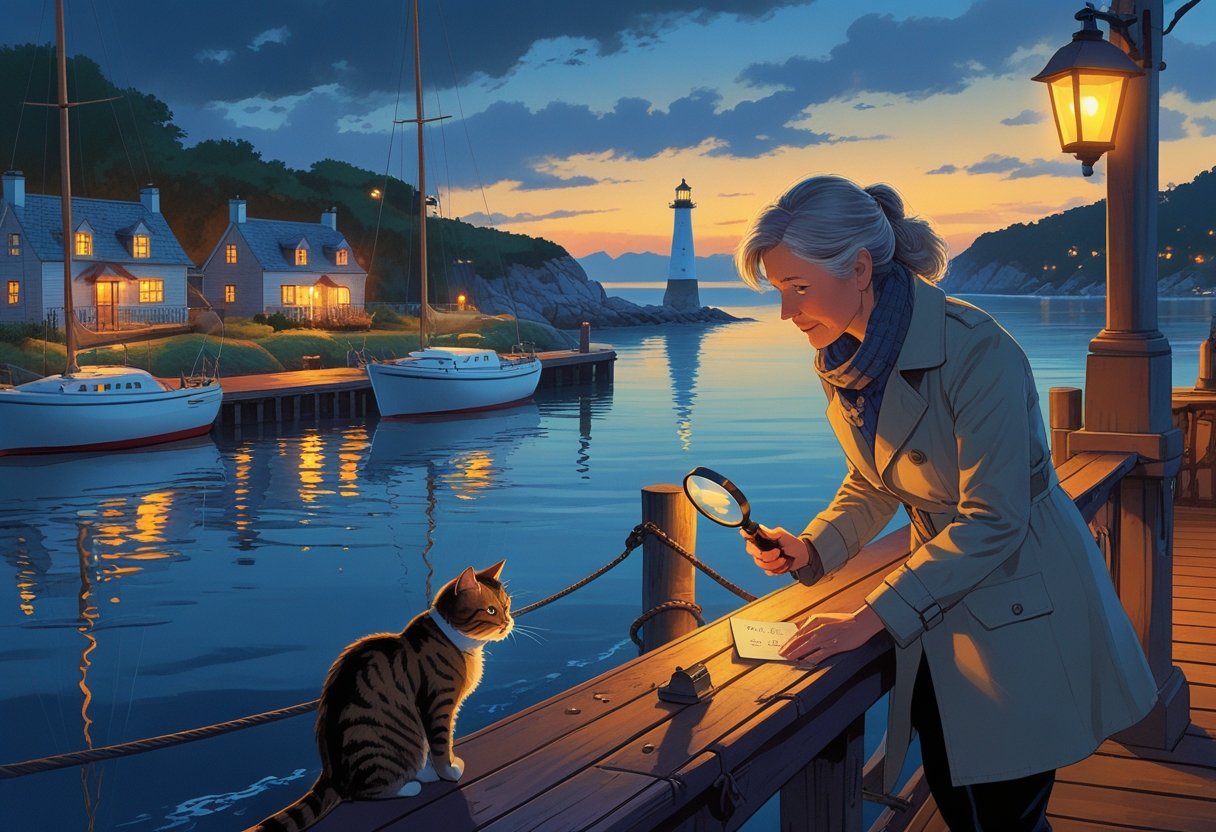
Nautical cozy mysteries blend the relaxing atmosphere of coastal settings with engaging puzzles, offering readers escape into worlds where marine biologists, lighthouse keepers, and seafood restaurant owners become unlikely detectives. The subgenre has gained popularity as readers seek comfort reads that provide both mystery and the soothing imagery of ocean waves and beach communities.
This exploration of nautical cozy mysteries will examine what defines the subgenre, highlight standout books and authors, and reveal the unique themes that set these maritime mysteries apart from their thriller counterparts. Readers will discover series worth diving into and understand why these ocean-themed mysteries have captured the attention of cozy mystery enthusiasts worldwide.
What Is a Nautical Cozy Mystery?
Nautical cozy mysteries combine the gentle, community-focused elements of traditional cozy mysteries with maritime settings and seafaring themes. These stories feature amateur detectives solving crimes aboard ships, in coastal towns, or around harbors while maintaining the genre’s characteristic light tone and minimal violence.
Defining Features of Nautical Cozy Mysteries
Nautical cozy mysteries feature amateur sleuths who solve crimes in water-related environments. The protagonist typically lives or works in a coastal community, aboard a cruise ship, or on an island.
These mystery books maintain the cozy tradition of minimal graphic violence. Murders occur off-page, and descriptions focus on the puzzle rather than gruesome details.
The stories emphasize community relationships among boat owners, fishing crews, lighthouse keepers, or cruise passengers. Characters often know each other well, creating the intimate atmosphere essential to cozy mysteries.
Maritime professions frequently appear as character backgrounds. Protagonists might run seaside cafes, work as marine biologists, operate charter boats, or manage harbor facilities.
The detective work involves logical deduction rather than police procedures. Amateur sleuths use their local knowledge of tides, weather patterns, or boat operations to solve cases.
Differences from Traditional Cozy Mysteries
Traditional cozy mysteries typically occur in small inland towns or villages. Nautical versions expand the setting to include harbors, islands, and ships while maintaining the close-knit community feel.
The specialized knowledge required differs significantly. Instead of knowledge about quilting or baking, nautical cozy mysteries incorporate sailing terminology, marine life, or coastal weather patterns.
Seasonal tourism creates unique dynamics in coastal settings. Many nautical cozy mysteries feature conflicts between year-round residents and seasonal visitors that don’t appear in landlocked communities.
Transportation methods change the story structure. Characters might use boats, ferries, or water taxis instead of cars, affecting how they investigate clues and interview suspects.
The isolation factor can be more pronounced. Islands or ships at sea create natural boundaries that contain both suspects and investigators.
Key Elements of Seafaring Settings
Physical locations include lighthouses, marinas, fishing docks, cruise ships, and seaside restaurants. These settings provide atmospheric backdrops and often play roles in the murder mystery plot.
Maritime activities drive story elements. Characters participate in fishing tournaments, boat races, or harbor festivals that bring communities together and create opportunities for conflict.
Weather and tides influence plot timing. Storms might trap suspects on islands, while tide schedules affect when bodies are discovered or evidence becomes accessible.
Local traditions shape character motivations. Lobster seasons, fishing rights, or historic maritime customs often provide motives for murder in these cozy mysteries.
Specialized equipment serves as both setting details and potential murder weapons. Boat rigging, navigation tools, or fishing gear appear throughout investigations while maintaining the genre’s non-violent approach.
Popular Nautical Cozy Mystery Books

Several successful series and standalone novels have established nautical settings as a beloved subgenre within cozy mysteries. Authors have created memorable characters and recurring locations that transport readers to coastal communities, cruise ships, and seaside towns.
Best-Selling Nautical Cozy Titles
Hope Callaghan’s Cruise Ship Cozy Mysteries stands out as one of the most extensive nautical cozy mystery series with 23 published books. The series includes popular titles such as:
- Starboard Secrets
- Portside Peril
- Lethal Lobster
- High Seas Heist
Maggie Blackburn’s Beach Reads Mystery Series features Summer Merriweather, a Shakespearean scholar who inherits a bookshop on Brigid’s Island, North Carolina. The series combines literary elements with coastal mystery settings.
The Working Stiffs Mystery Series by Wendy Delaney has gained recognition among cozy mystery readers. The series maintains high ratings and offers beach-themed mysteries that appeal to summer readers.
These cozy mystery books consistently appear on recommended reading lists for their engaging plots and maritime atmospheres.
Standalone Novels Versus Series
Series dominate the nautical cozy mystery landscape. Readers prefer returning to familiar characters and established coastal communities rather than standalone novels.
Cruise ship mysteries particularly benefit from series format. Characters can explore different ports while maintaining consistent shipboard settings and recurring cast members.
Coastal town series allow cozy mystery authors to develop intricate community relationships. Local residents, shop owners, and seasonal visitors create ongoing storylines that span multiple books.
Standalone novels exist but represent a smaller portion of nautical cozy mysteries. Publishers and readers favor series because they build loyal readerships and allow character development across multiple mysteries.
Series typically range from 5-25 books, with some cozy mystery authors continuing successful nautical series for decades.
Notable Nautical Cozy Mystery Authors
Hope Callaghan leads nautical cozy mystery authors with her prolific Cruise Ship Cozy Mysteries series. Her consistent publishing schedule and engaging maritime plots have established her as a genre favorite.
Maggie Blackburn has gained recognition for combining literary themes with coastal mystery settings. Her Beach Reads Mystery series appeals to readers who enjoy bookish elements alongside traditional cozy mysteries.
Wendy Delaney contributes to the beach mystery subgenre with her Working Stiffs Mystery Series. Her books maintain strong reader ratings and positive reviews within the cozy mystery community.
These cozy mystery authors have created distinctive voices within nautical settings. They balance traditional cozy mystery elements with maritime atmospheres, seasonal tourism dynamics, and coastal community relationships that define the subgenre.
Essential Themes and Tropes
Nautical cozy mysteries blend traditional genre elements with maritime settings, featuring amateur detectives who solve crimes aboard ships or in coastal communities. These stories typically involve murder mysteries on cruise ships, private yachts, or waterfront locations where the confined spaces create ideal conditions for both intimate character development and puzzling whodunits.
Amateur Sleuths at Sea
Maritime amateur sleuths often possess unique qualifications that justify their involvement in solving crimes. Marine biologists bring scientific expertise to cases involving ocean-related murders. Ship stewards and cruise directors have access to passenger information and restricted areas.
Lighthouse operators serve isolated communities where official law enforcement may be hours away. Restaurant owners specializing in seafood develop connections with local fishing communities and visiting tourists alike.
These characters face distinct challenges on the water. Limited communication with mainland authorities forces them to rely on their own deductive skills. Confined passenger lists on ships create closed-circle mysteries where the perpetrator must be among known individuals.
Weather conditions and rough seas can trap suspects and sleuths together, heightening tension. The amateur sleuth’s maritime knowledge becomes crucial for understanding nautical terminology, ship layouts, and ocean-related clues that professional landlocked detectives might miss.
Cruise Ships and Yacht Settings
Cruise ships provide the perfect stage for cozy mysteries with their self-contained communities and diverse passenger populations. Multiple decks offer various crime scenes, from elegant dining rooms to isolated storage areas. Staff quarters, engine rooms, and private balconies create opportunities for both murder and investigation.
Passenger activities like shore excursions, deck parties, and formal dinners serve as alibis or opportunities for criminal behavior. The ship’s structured schedule helps establish timelines crucial to solving cases.
Private yachts offer more intimate settings with smaller cast sizes. Limited crew members and guests create tighter social dynamics. Remote anchoring locations eliminate escape routes and outside interference.
Onboard amenities like libraries, spas, and observation decks provide atmospheric locations for clue discovery. The captain’s authority and maritime law add complexity to jurisdictional questions about crime investigation.
Murder and Mystery on the Water
Water-based murders in cozy mysteries often involve methods that reflect the maritime environment. Drowning incidents may appear accidental until the sleuth discovers evidence of foul play. Poisoned seafood takes advantage of fresh catches and onboard dining.
Man overboard situations create urgent time constraints for both rescue and investigation. The ocean’s ability to wash away evidence adds complexity to crime scene analysis.
Maritime equipment becomes both murder weapon and clue source. Anchor chains, life preservers, and nautical ropes feature prominently in both crime commission and solution. Ship maintenance areas with dangerous machinery provide isolated locations for confrontations.
Weather patterns and tidal schedules influence both criminal timing and investigative opportunities. The sleuth must understand how ocean conditions affect evidence preservation and witness reliability. Navigation equipment and ship logs often provide crucial timeline information that helps solve the mystery.
Famous Nautical Cozy Mystery Authors
Nautical cozy mysteries have been shaped by legendary authors who mastered the art of combining maritime settings with intimate mysteries, from Christie’s classic island tales to contemporary writers exploring modern coastal communities.
Agatha Christie’s Maritime Mysteries
Agatha Christie established the foundation for nautical cozy mysteries with her masterful island and shipboard settings. Her most famous maritime work, And Then There Were None, takes place on an isolated island where guests are picked off one by one.
Christie’s Death on the Nile showcases her ability to use confined water settings to create tension. The Nile steamer becomes a floating crime scene where passengers cannot escape the detective’s scrutiny.
Her understanding of maritime psychology made these stories compelling. Christie recognized that water settings naturally isolate suspects and create the perfect closed-room mystery atmosphere that cozy readers love.
The author’s boat-based mysteries like The Mystery of the Blue Train demonstrate her versatility. She seamlessly blended luxury travel with murder, establishing templates that modern nautical cozy authors still follow today.
Ruth Ware and Contemporary Nautical Stories
Ruth Ware has modernized the nautical mystery genre with psychological depth and contemporary settings. Her novel The Woman in Cabin 10 brings Christie’s isolated ship concept into the modern cruise era.
Ware’s approach focuses on claustrophobic maritime environments where characters face both external mysteries and internal psychological challenges. She updates classic tropes with modern technology and social dynamics.
Her writing style appeals to readers who want traditional mystery structures with contemporary sensibilities. Ware maintains the cozy mystery’s emphasis on puzzle-solving while adding layers of psychological complexity.
The author’s success has inspired other contemporary writers to explore similar themes. Her influence extends beyond individual books to shape how modern authors approach nautical settings in cozy mysteries.
Emerging Voices in the Genre
Bree Baker leads contemporary nautical cozy authors with her Seaside Café Mysteries series. Set in the coastal town of Charm, her books feature Everly Swan solving mysteries while running a seaside tea shop.
Lucy Burdette contributes significantly with her Key West Food Critic Mysteries. Her series combines culinary elements with tropical maritime settings, creating a unique subgenre within nautical cozies.
Lynn Cahoon offers the Tourist Trap Mysteries series set in coastal California. Her books demonstrate how modern authors blend small-town charm with seaside atmospheres.
These emerging authors share common elements:
- Community focus: Small coastal towns with recurring characters
- Professional protagonists: Restaurant owners, librarians, or local business operators
- Local flavor: Regional maritime culture and traditions
- Series format: Multiple books building character relationships over time
Nautical Cozy Mystery Series to Discover
Several established series offer readers the perfect blend of seaside settings, engaging mysteries, and memorable characters. These series combine long-running storylines with romantic elements and humor that keep readers coming back for more maritime adventures.
Long-Running Series Set at Sea
The Seaside Café Mysteries by Bree Baker stands out with seven books following Everly Swan in the charming coastal town of Charm. Each cozy mystery delivers twisty plots and character development that spans multiple books.
Lucy Burdette’s Key West Food Critic Mysteries offers twelve books set in Florida’s tropical paradise. The series combines culinary elements with island mysteries, featuring recipes alongside murder investigations.
The Tourist Trap Mysteries by Lynn Cahoon takes place in a coastal California town. This long-running cozy mystery series focuses on small-town dynamics and recurring local mysteries.
Cruise Ship Cozy Mysteries encompasses 23 books across multiple authors. This extensive series explores various cruise ship settings and maritime mysteries.
Beloved Recurring Characters
Everly Swan from the Seaside Café Mysteries has captured readers with her growth throughout the series. Her development from newcomer to established community member creates emotional investment.
The Key West Food Critic series features a cast of recurring locals who become familiar friends to readers. Each cozy mystery builds upon established relationships and community connections.
Laura Levine’s Jaine Austen appears in multiple books including Killer Cruise. This character’s comedic mishaps and problem-solving abilities create consistent entertainment value across the series.
Alex from the Enchanted Bay Mysteries by Esme Addison brings magical elements to nautical settings. Though currently limited to two books, readers anticipate more adventures with this water witch character.
Mixing Romance, Humor, and Adventure
These cozy mystery series blend romantic subplots with lighthearted humor and seaside adventures. The Enchanted Bay Mysteries incorporates romance alongside magical elements and mystery solving.
Jaine Austen’s cruise ship adventure delivers comedy through mishaps and misunderstandings. The series maintains humor while delivering satisfying mystery resolutions.
The Seaside Café Mysteries balances romantic tension with community relationships. Character interactions provide both comedic moments and emotional depth throughout the series.
Each series offers unique combinations of these elements while maintaining the cozy mystery genre’s signature promise of justice and community resolution.
How Nautical Cozy Mysteries Differ from Thrillers
Nautical cozy mysteries and thrillers represent opposite ends of the mystery spectrum despite sharing maritime settings. The fundamental differences lie in their approach to tension, violence, and reader experience.
Tone and Pacing Comparison
Nautical cozy mysteries maintain a gentle, leisurely pace that mirrors life in small coastal communities. The narrative unfolds slowly, allowing readers to savor character interactions and scenic descriptions of harbors, lighthouses, and fishing villages.
Cozy mystery characteristics:
- Conversational, warm tone
- Focus on community relationships
- Detailed descriptions of maritime settings
- Amateur sleuths solving crimes through logic and observation
Thrillers operate at breakneck speed with mounting tension. They thrust readers into dangerous situations aboard ships or remote islands where characters face immediate physical threats.
Thriller characteristics:
- Urgent, intense tone
- High-stakes situations
- Fast-paced action sequences
- Professional investigators or ordinary people in extraordinary circumstances
The pacing difference becomes evident in how each genre handles investigation scenes. Cozy mysteries feature characters casually questioning neighbors over coffee at the marina café. Thrillers present interrogations under time pressure with lives hanging in the balance.
Levels of Suspense and Violence
Cozy mysteries deliberately avoid graphic violence and explicit content. Deaths typically occur off-page, and the focus shifts immediately to puzzle-solving rather than dwelling on disturbing details.
Violence in nautical cozies often involves:
- Bloodless deaths discovered after the fact
- Mild threats that create concern rather than terror
- Accidents that may or may not be intentional
Thrillers embrace intense suspense and graphic descriptions. They use violence as a tool to create fear and urgency, often featuring detailed scenes of danger and physical confrontation.
Thriller violence includes:
- Graphic death scenes described in vivid detail
- Physical confrontations between characters
- Life-threatening situations that create genuine fear
The suspense levels differ dramatically. Cozy mystery books generate curiosity about “whodunit” while maintaining reader comfort. Thrillers create anxiety and genuine concern for character safety through escalating danger.