The most effective horror and suspense often comes not from what audiences see, but from what they don’t see. Building tension without gore requires mastering psychological techniques that tap into primal fears through atmosphere, suggestion, and emotional manipulation rather than graphic violence. This approach challenges creators to develop more sophisticated storytelling skills while making their content accessible to broader audiences.
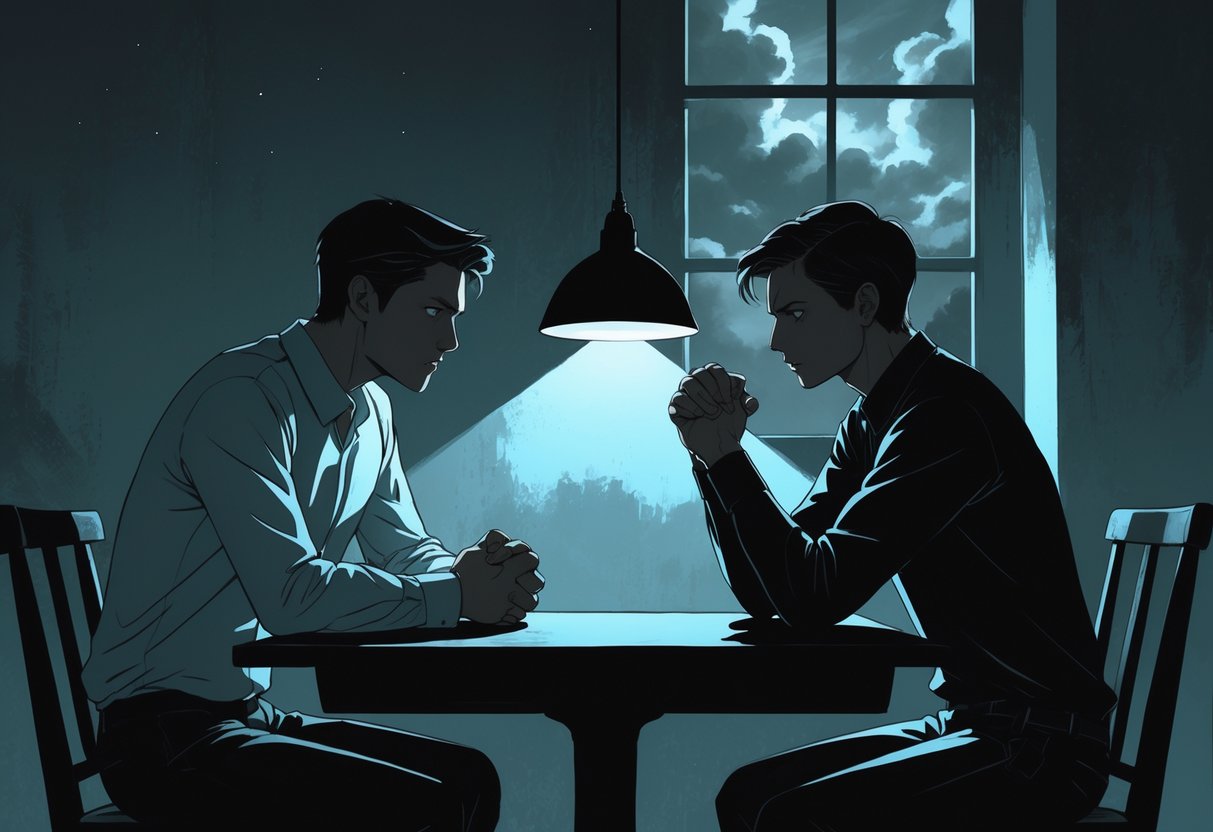
Many successful writers and filmmakers have discovered that removing gore forces them to become more creative in their approach to fear. The absence of graphic violence shifts focus to character development, atmospheric building, and psychological depth. These elements often create more lasting impact than momentary shock value.
The psychology behind non-violent tension reveals that audiences’ imaginations frequently conjure scenarios more frightening than anything explicitly shown. Through examining proven techniques, character dynamics, and real-world examples, creators can learn to build suspense that resonates on deeper emotional levels while maintaining broad appeal across different age groups and sensitivity levels.
Understanding the “No-Gore” Rule
The no-gore rule emerged from specific creative contexts where graphic violence undermines narrative goals. This approach prioritizes psychological tension over shock value and requires writers to develop sophisticated techniques for creating suspense.
Origins and Purpose of the Rule
The no-gore rule originated in several distinct creative environments. Cozy mystery novels established this standard to focus on puzzle-solving rather than graphic violence. Gaming platforms like Roblox enforce strict anti-violence policies to maintain family-friendly environments. Horror creators discovered that excessive gore often diminishes genuine fear.
Primary purposes include:
- Audience accessibility – Content reaches broader demographics
- Creative challenge – Forces innovative tension-building techniques
- Sustained engagement – Maintains long-term psychological impact
- Professional requirements – Meets platform or publisher guidelines
Writers in fantasy forums report that violence works best as a threat rather than spectacle. The rule encourages authors to use violence sparingly and meaningfully. This constraint often produces more sophisticated storytelling techniques.
Differences Between Suspense and Shock
Suspense builds gradually through uncertainty and anticipation. Shock delivers immediate impact through graphic imagery. These approaches create fundamentally different reader experiences.
Suspense characteristics:
- Develops over time
- Creates lasting tension
- Engages imagination
- Maintains reader investment
Shock characteristics:
- Provides instant reaction
- Often diminishes quickly
- Shows explicit content
- Can alienate audiences
Horror films demonstrate this distinction clearly. Movies with minimal gore rely on atmosphere and psychological pressure. Gore-heavy films depend on visual impact but may lose effectiveness through desensitization. Suspense allows readers to fill gaps with imagination, often creating more powerful responses than explicit descriptions.
Myths About Non-Violent Tension
Several misconceptions surround violence-free storytelling. The most common myth suggests that removing gore automatically weakens dramatic impact. Professional writers consistently demonstrate the opposite through successful no-gore narratives.
Common myths:
- Violence equals stronger emotional response
- Readers require graphic content for engagement
- Non-violent stories lack authenticity
- Gore restrictions limit creative freedom
Reality shows that psychological effects often surpass physical violence in impact. Veterans and trauma specialists note that emotional wounds frequently outlast physical injuries. Writers who master tension without gore develop versatile skills applicable across genres. The constraint actually expands creative possibilities by forcing innovative approaches to conflict and resolution.
Psychology of Fear and Suspense Without Violence
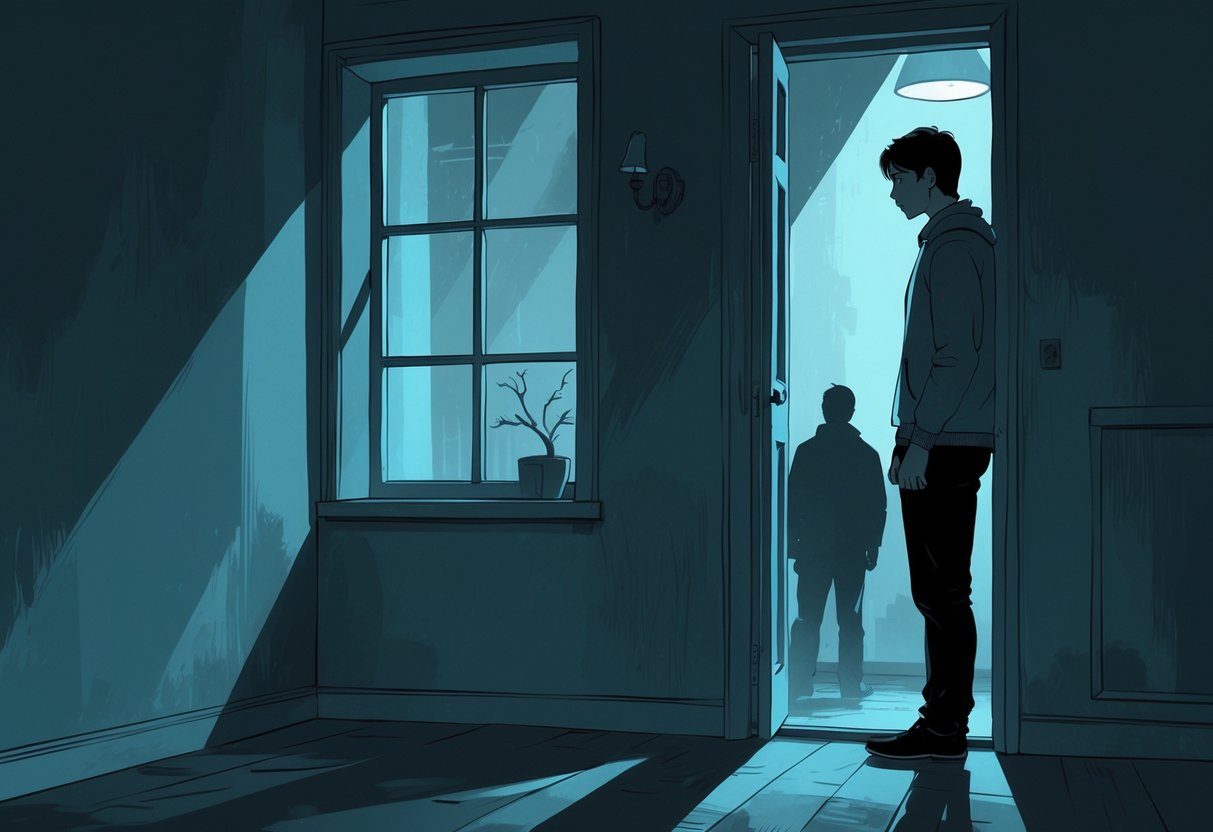
The human brain processes fear through imagination rather than explicit imagery, creating more powerful and lasting psychological impact. Uncertainty activates stress responses that generate sustained tension more effectively than graphic violence.
How the Mind Fills in the Blanks
The brain automatically completes incomplete information through a process called pattern completion. When horror creators provide partial details, viewers construct their own frightening scenarios that surpass any explicit depiction.
This psychological mechanism explains why suggested violence often proves more effective than shown violence. The imagination draws from personal fears and experiences to create customized terror. A shadow moving behind a door becomes more threatening than revealing the actual source.
Key elements that trigger imagination:
- Sounds without visual source
- Partial glimpses of threats
- Character reactions without showing the cause
- Environmental changes that suggest danger
Research shows that anticipated pain creates stronger fear responses than actual pain. Horror works similarly by allowing minds to construct worst-case scenarios that exceed what creators could practically show.
Emotional Impact Versus Graphic Detail
Emotional engagement creates deeper connections than visual shock value. Characters experiencing genuine fear transmits anxiety to audiences through mirror neurons and empathetic responses.
Gore provides immediate visceral reaction but lacks sustained impact. Psychological tension builds gradually and maintains intensity throughout the experience. The difference lies in engagement duration and memory retention.
Studies demonstrate that emotional memories form stronger neural pathways than visual memories alone. Horror that focuses on character psychology creates lasting impressions that continue affecting viewers long after exposure ends.
Emotional techniques include:
- Character vulnerability and relatability
- Gradual revelation of threats
- Building atmosphere through mood
- Focusing on psychological deterioration
Leveraging Uncertainty and Anticipation
Uncertainty activates the brain’s threat detection systems more effectively than known dangers. The amygdala responds stronger to potential threats than confirmed ones, creating sustained alertness.
Anticipation builds tension through delayed gratification of fear. The longer audiences wait for resolution, the more anxiety accumulates. This technique requires careful pacing to maintain engagement without losing momentum.
Timing strategies that maximize uncertainty:
- Irregular pacing that breaks expectations
- False resolutions followed by renewed tension
- Multiple possible outcomes kept viable
- Information revealed gradually rather than immediately
The fear of the unknown taps into primal survival instincts. Horror creators exploit this by withholding key information while providing enough details to suggest danger exists.
Techniques for Creating Tension Without Gore
Effective tension relies on psychological manipulation rather than visual shock. Writers can build fear through environmental details, strategic pacing, suggested dangers, and deliberate audio choices.
Atmosphere and Setting
The physical environment serves as the foundation for psychological tension. Dark spaces create uncertainty about what lurks beyond sight. Cramped quarters increase claustrophobia and limit escape routes.
Weather conditions amplify unease. Fog obscures vision and creates isolation. Storms mask approaching threats with natural noise. Rain turns familiar landscapes into alien territories.
Key atmospheric elements include:
- Temperature changes that suggest supernatural presence
- Decay and deterioration in buildings or objects
- Shadows that move independently of light sources
- Mirrors and reflective surfaces for unexpected revelations
Familiar settings turned hostile prove particularly effective. A childhood bedroom becomes threatening when objects appear moved. Empty schools echo with phantom voices. The writer transforms safety into danger through subtle environmental shifts.
Pacing and Structure
Tension requires careful rhythm between action and stillness. Slow builds allow anxiety to accumulate naturally. Quick bursts of activity release pressure before rebuilding it higher.
Short sentences create urgency during critical moments. Longer passages during calm periods let readers’ guards drop. Chapter breaks at peak anxiety force readers to sit with discomfort.
Strategic timing techniques:
- False relief followed by renewed threat
- Countdown scenarios with ticking time pressure
- Information reveals at precise emotional peaks
- Delayed gratification of character safety
Writers control reader heartbeat through sentence structure. Fragments suggest panic. Run-on sentences create breathless fear. Paragraph breaks function as dramatic pauses in horror narratives.
Implied Threats and Unseen Dangers
What remains hidden frightens more than what appears on screen. Scratch marks on doors suggest violent struggles without showing them. Empty chairs still warm from recent occupants indicate invisible watchers.
Partial glimpses prove more terrifying than full reveals. A shadow disappearing around corners. Footsteps stopping when characters listen. Doors found open that were previously closed.
Suggestion methods:
| Technique | Effect |
|---|---|
| Off-screen sounds | Creates imagined threats |
| Missing characters | Implies terrible fates |
| Disturbed objects | Shows recent presence |
| Partial evidence | Forces reader imagination |
The human mind fills gaps with worst-case scenarios. Writers exploit this tendency by providing incomplete information. They plant seeds of possibility and let reader anxiety cultivate them.
Sound and Silence for Mood
Audio elements shape emotional response without visual stimulation. Silence amplifies small sounds into major threats. Sudden noise breaks tension with shock value.
Natural sounds become ominous in wrong contexts. Wind through trees suggests whispers. Settling houses mimic footsteps. Normal becomes abnormal through character interpretation.
Effective audio techniques:
- Repetitive sounds that gradually increase intensity
- Familiar sounds in unexpected locations or times
- Mechanical noises that suggest inhuman presence
- Organic sounds from unknown sources
Writers describe audio through character reactions rather than direct statements. Skin crawls at certain frequencies. Heartbeat drowns out environmental noise. Fear changes how characters process sound information.
Character-Driven Tension and Relationships
Strong character dynamics and emotional stakes create suspense that rivals any graphic scene. Writers can craft compelling tension through carefully developed relationships, internal conflicts, and strategic dialogue that keeps readers engaged without relying on violent imagery.
Building Empathy for Characters
Character empathy forms the foundation of tension in no-gore storytelling. When readers care deeply about characters, the threat of loss becomes more powerful than graphic depictions.
Writers should establish relatable vulnerabilities that make characters human. A detective struggling with self-doubt creates more investment than one who appears invincible. Personal flaws, past traumas, or simple everyday concerns help readers connect emotionally.
Character backstories must serve the present tension. A character’s fear of abandonment becomes relevant when they face betrayal. Their childhood phobia gains meaning when it threatens their current mission.
Internal monologue reveals character thoughts during stressful moments. This technique allows readers to experience anxiety, fear, or determination alongside the character. The closer readers feel to characters, the more they worry about potential consequences.
Small details matter significantly. Characters who feed stray cats, call their mothers regularly, or remember birthdays become people worth protecting in readers’ minds.
Conflict Without Violence
Psychological pressure creates tension through mental rather than physical threats. Characters face impossible choices, moral dilemmas, or time constraints that challenge their values and decision-making abilities.
Professional stakes work effectively in many genres. A surgeon facing a malpractice lawsuit, a teacher protecting students from institutional corruption, or a journalist exposing dangerous truths all face real consequences without requiring violence.
Relationship conflicts drive tension through emotional investment. Family secrets, romantic betrayals, or friendship tests create natural drama. The fear of losing someone important often outweighs physical danger.
Power dynamics shift between characters to maintain uncertainty. The person in control changes throughout the story, keeping readers guessing about outcomes.
Environmental pressure adds external stress without gore. Natural disasters, economic collapse, or social upheaval provide backdrop tension that affects character decisions and relationships.
Dialogue as a Tool for Suspense
Strategic dialogue reveals information gradually while maintaining mystery. Characters withhold crucial details through careful word choices, creating tension about what remains unsaid.
Subtext carries the real message beneath surface conversations. Two characters discussing dinner plans might actually negotiate a dangerous alliance. Readers sense the hidden meaning without explicit statements.
Interruptions and silences build suspense effectively. Characters cut off mid-sentence when they almost reveal secrets. Long pauses suggest internal struggles or dangerous knowledge.
Dialogue pacing mirrors story tension. Short, clipped exchanges during high-stress moments contrast with longer conversations during calmer periods. This rhythm guides reader emotional responses.
Multiple conversation layers work simultaneously. Characters discuss surface topics while body language, tone, and word choice convey deeper meanings about trust, fear, or hidden agendas.
Case Studies in Non-Violent Suspense
Psychological tension proves more effective than graphic violence in many acclaimed films. The Babadook demonstrates how grief and depression create lasting dread without bloodshed, while The Others builds atmosphere through mood rather than gore.
Classic Examples from Film
The Shining stands as a masterpiece of psychological horror that achieves its disturbing effects through atmosphere and character deterioration. The film contains minimal gore yet maintains viewers in a state of mounting anxiety through Jack Torrance’s gradual descent into madness.
Hitchcock’s Psycho revolutionized horror by suggesting violence rather than showing it explicitly. The famous shower scene implies brutality without graphic imagery. The director understood that audiences’ imaginations often conjure more disturbing images than any practical effect could achieve.
Rosemary’s Baby builds paranoia through social isolation and gaslighting. The protagonist’s uncertainty about her neighbors’ intentions creates sustained unease. Viewers experience doubt alongside Rosemary, questioning whether the conspiracy exists or stems from psychological breakdown.
Horror Without the Gore
Japanese horror films showcase how cultural storytelling traditions emphasize psychological dread over visceral shock. These productions rely on dark ambience and careful pacing to generate fear responses.
The Babadook transforms grief into a tangible threat without depicting violence. The monster represents overwhelming parental responsibility and depression. The film disturbs audiences through emotional weight rather than physical terror.
The Others demonstrates effective atmospheric horror through its isolated setting and mysterious occurrences. The constant sense that something fundamental is wrong maintains tension throughout. The film proves that properly executed mood and setting eliminate any need for graphic content.
Modern psychological horror continues this tradition by exploring existential themes. These films understand that personal anxieties often prove more frightening than external threats.
Notable Characters: Paul in ‘In a Valley of Violence’
Paul represents a complex protagonist who builds tension through restraint rather than immediate action. His character demonstrates how withheld violence can create more suspense than constant conflict.
The character’s background suggests capability for violence while showing reluctance to engage in it. This internal conflict generates dramatic tension as audiences anticipate his eventual response to provocation.
Paul’s interactions with other characters reveal layers of his personality without explicit exposition. The performance relies on subtle cues and behavioral details rather than dramatic confrontations.
Distribution and Media Formats
DVD releases of non-violent suspense films often include extensive commentary tracks that explain directorial techniques. These bonus features demonstrate how filmmakers achieve psychological effects through cinematography, sound design, and editing choices.
Streaming platforms have created new opportunities for atmospheric horror to reach audiences. The home viewing environment often enhances psychological tension since viewers experience the content in intimate settings.
| Format | Advantages for Suspense |
|---|---|
| DVD | Commentary tracks explain techniques |
| Streaming | Intimate viewing environment |
| Theatrical | Shared audience tension |
Special editions frequently include deleted scenes that show how directors refined their approach to building tension. These materials provide insight into the creative process behind effective non-violent storytelling.
Practical Tips for Writers and Creators
Writers must navigate specific challenges when building tension without gore, from avoiding common narrative traps to balancing genre expectations while gauging audience response effectively.
Common Pitfalls to Avoid
Many writers substitute gore with excessive jump scares, creating cheap thrills rather than sustained tension. This approach fails because readers become desensitized quickly. Instead, writers should focus on psychological unease through unexplained phenomena or character deterioration.
Another frequent mistake involves over-explaining supernatural elements. Mystery drives engagement more effectively than detailed exposition. Writers should reveal information gradually, allowing readers to fill gaps with their imagination.
Pacing errors often undermine tension-building efforts. Constant high-stakes moments exhaust readers, while prolonged buildup without payoff creates frustration. The most effective approach alternates between tension peaks and brief relief periods.
Writers sometimes rely too heavily on atmospheric description without advancing plot or character development. Every scene must serve multiple purposes—building mood while progressing the story forward.
Blending Genres Responsibly
Horror elements can enhance other genres without overwhelming core narratives. Romance writers might incorporate psychological suspense through mysterious love interests or haunted locations. The key lies in maintaining genre balance rather than forcing horror elements.
Setting boundaries proves essential when writing for specific audiences. Children’s fiction requires different approaches than adult thrillers. Writers should establish content guidelines early, considering their target demographic’s expectations and comfort levels.
Gothic horror techniques translate well across genres. Atmospheric descriptions, family secrets, and decaying environments create unease without violence. These elements work particularly well in mystery and literary fiction.
Writers must understand reader expectations within their chosen genre. Thriller readers expect different tension levels than cozy mystery audiences. Researching comparable works helps establish appropriate intensity levels.
Testing Audience Reactions
Beta readers provide invaluable feedback on tension effectiveness. Writers should select diverse readers representing their target audience. Questions should focus on specific emotional responses rather than general impressions.
Key feedback areas include:
- Moments of highest tension
- Scenes that felt slow or rushed
- Character actions that seemed believable
- Overall emotional impact
Writers can test different versions of crucial scenes with separate reader groups. This approach reveals which techniques generate stronger responses without relying on violence or gore.
Reading groups and writing workshops offer opportunities to gauge immediate reactions. Live feedback sessions reveal where readers lose interest or become confused. Writers should note physical reactions like leaning forward or checking devices during readings.
Online platforms provide broader testing opportunities through serialized releases or excerpt sharing. Comment sections and engagement metrics indicate reader investment levels throughout the narrative.