Mystery writers face a fundamental choice that shapes every aspect of their storytelling: whether to craft a cozy mystery or a thriller. While both subgenres involve crime and detection, they differ dramatically in their structural approach, from pacing and violence levels to protagonist types and resolution styles. Understanding these distinctions helps writers make intentional choices about tone, audience expectations, and narrative construction.
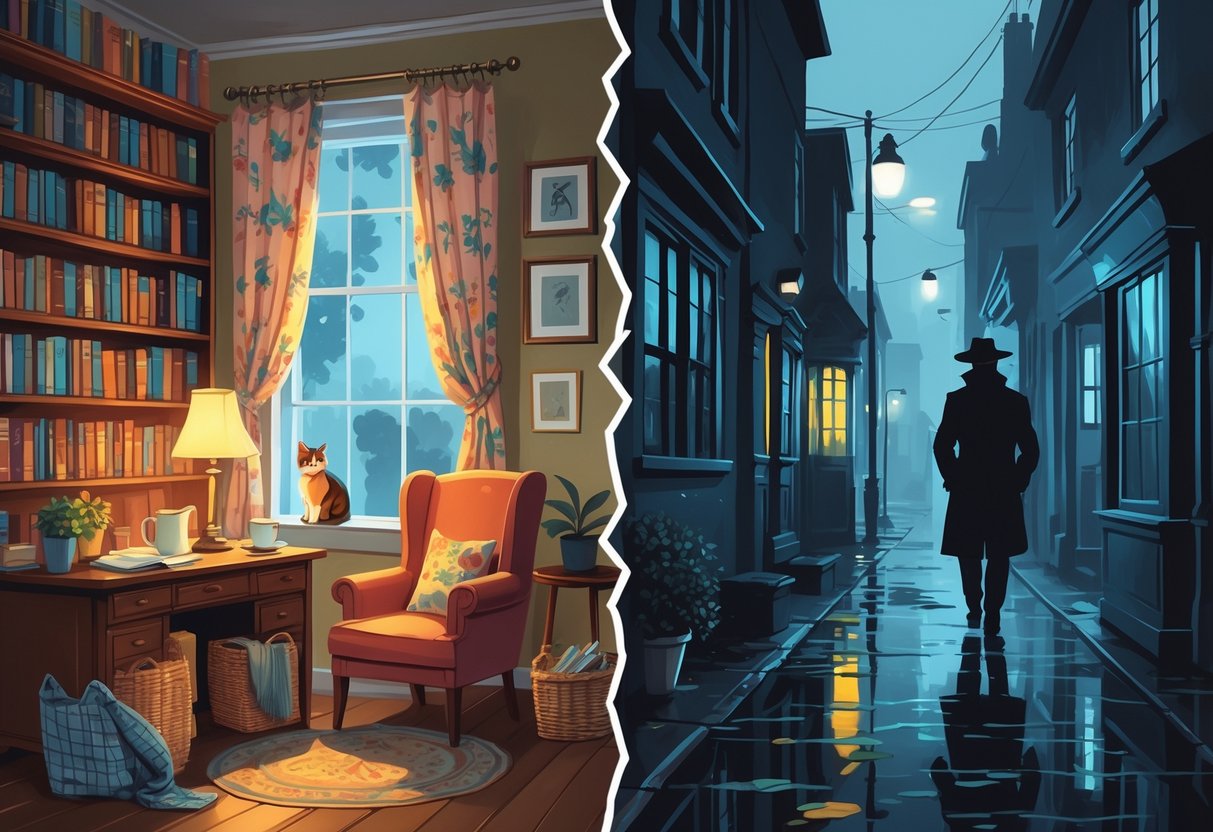
Cozy mysteries typically feature amateur sleuths in intimate communities, with violence occurring offstage and a lighthearted tone prevailing throughout the narrative. Thrillers, by contrast, embrace tension and danger, often placing professional investigators or ordinary people in life-threatening situations with graphic depictions of violence. These foundational differences extend far beyond surface-level content restrictions.
The structural mechanics of these subgenres affect plot construction, character development, supporting cast dynamics, and moral frameworks. Writers who grasp these differences can better serve their target audiences and meet genre expectations while finding opportunities for innovation within established boundaries.
Defining Cozy Mysteries and Thrillers
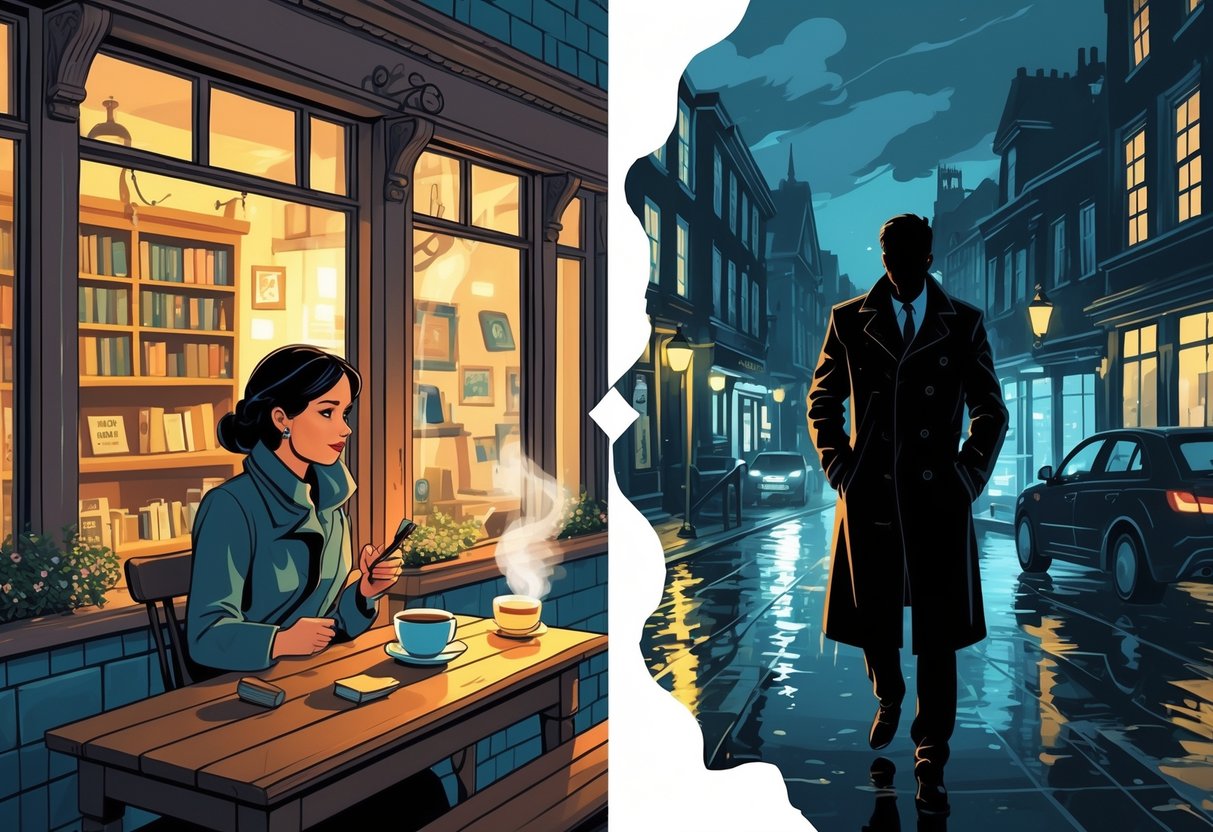
Cozy mysteries and thrillers represent distinct branches of crime fiction, each with specific conventions that shape how stories unfold and how readers experience suspense. These mystery subgenres differ fundamentally in their approach to violence, setting, tone, and the role of their protagonists.
Key Characteristics of Cozy Mysteries
Cozy mysteries feature amateur sleuths who solve crimes in small, socially intimate communities. Violence and explicit content occur offstage, keeping the reading experience comfortable rather than disturbing.
The detective in cozies typically possesses a profession or hobby that naturally connects them to the crime scene. This character is often well-educated and intuitive, relying on observation and deduction rather than physical confrontation. The settings emphasize charm and familiarity—bookshops, bakeries, small towns, or tight-knit neighborhoods.
Essential elements of cozies include:
- Murder as the typical crime (though described minimally)
- No graphic violence, sexual content, or profanity
- Focus on puzzle-solving and intellectual detection
- Lighthearted or humorous tone despite the crime
- Justice served by story’s end
The emphasis remains on the mystery puzzle itself rather than suspense or danger. Readers of cozies expect a safe reading experience where they can follow clues alongside the protagonist without encountering disturbing content.
Key Elements of Thriller Mysteries
Thrillers prioritize suspense and forward momentum over puzzle-solving. The narrative focuses on preventing a future crime rather than solving a past one, creating immediate tension and urgency.
The antagonist often appears early in thriller narratives. The protagonist works against time to stop the villain from executing their plans, placing personal safety and survival at the story’s center. This creates fundamentally different stakes than cozies, where the crime has already occurred.
Thriller characteristics include:
- High-stakes scenarios with immediate danger
- Professional investigators or trained protagonists
- Darker tone with possible violence on-page
- Fast pacing and action sequences
- Broader settings beyond small communities
The thriller format allows for graphic content, profanity, and intense violence when relevant to the plot. Readers expect to feel threatened alongside characters, experiencing visceral reactions to danger and suspense throughout the narrative.
Genre Rules and Reader Expectations
Each subgenre operates under specific conventions that authors must understand. Cozies require the detective to be an amateur, the violence to remain offstage, and the community to be small and interconnected. Breaking these rules risks disappointing readers who choose cozies specifically for their comfort level.
Thrillers demand escalating tension and immediate stakes. The protagonist must face genuine danger, and the outcome cannot feel predetermined. Readers expect to feel the character’s peril directly rather than observing it from a safe distance.
Genre boundaries matter for:
- Marketing and categorization
- Reader satisfaction and reviews
- Agent and publisher submissions
- Series consistency and branding
Understanding these distinctions helps writers craft stories that meet audience expectations while exploring creative possibilities within each framework. Crime fiction encompasses both approaches, offering readers choices based on preferred intensity levels and narrative styles.
Structural Differences in Plot Construction
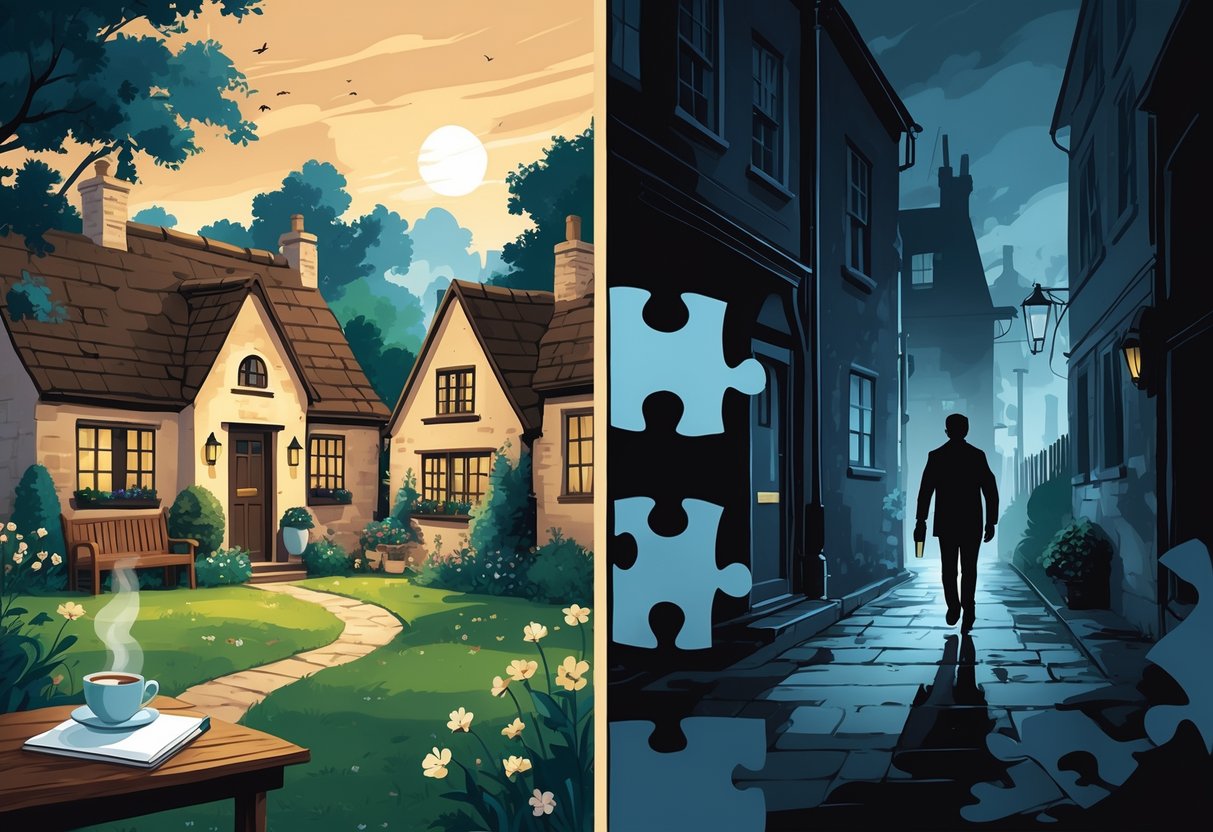
Cozy mysteries and thrillers construct their plots around different structural principles that shape how crime unfolds, how tension builds, and how readers experience the story. These differences extend from the opening pages through the final revelation.
Setting and Atmosphere
Cozy mysteries build their structure around contained, familiar settings that serve as a recurring backdrop throughout the story and often across an entire series. A small town, bookshop, or neighborhood creates boundaries that keep suspects within reach and allow readers to develop a sense of place. The crime disrupts this peaceful setting temporarily, but the plot structure moves toward restoring harmony.
Thrillers construct plots that expand outward rather than containing inward. Settings shift frequently and range widely, from urban landscapes to international locations. The environment itself often contributes to the threat, with dark alleyways, abandoned buildings, or isolated locations amplifying danger. Multiple settings allow for chase sequences and escalating scope as the plot unfolds.
The structural role of setting differs fundamentally between genres. Cozies use setting as a stable anchor point where the detective returns between investigative beats. Thrillers use setting as a dynamic element that changes with each major plot point, preventing characters from finding safety or establishing routines.
Pacing and Tension
Cozy mysteries structure their pacing around investigation beats rather than immediate physical danger. The plot moves forward through conversations, clue discovery, and logical deduction. Tension builds gradually as the amateur sleuth gets closer to the truth, with stakes that feel personal but rarely life-threatening until late in the story.
Thrillers compress time and accelerate pacing through constant escalation. Each plot beat introduces a new threat or reveals that danger is closer than previously understood. The protagonist faces immediate physical peril at regular intervals throughout the structure. Deadlines, countdowns, and race-against-time elements create urgency from early chapters.
Key pacing differences:
- Chapter length: Cozies maintain consistent chapter lengths; thrillers often use shorter chapters during action sequences
- Time compression: Cozies may span weeks; thrillers often unfold over days or hours
- Breathing room: Cozies include scenes of daily life and relationship building; thrillers minimize downtime between threats
Approach to Violence and Suspense
The structural treatment of crime separates these genres distinctly. Cozy mysteries place the actual crime offscreen or describe it with minimal detail. The murder happens before the story begins or occurs between chapters. This structural choice allows the plot to focus on intellectual puzzle-solving rather than visceral reactions to violence.
Thrillers integrate graphic violence directly into the plot structure as a tool for creating suspense and demonstrating stakes. Violent scenes occur on-page, described with sensory detail that makes readers feel the danger. The villain’s capacity for harm appears throughout the structure rather than being confined to a single past event.
Suspense builds differently in each structure. Cozies create suspense through the question of who committed the crime and whether the sleuth will identify them before making a dangerous mistake. Thrillers create suspense through the question of whether the protagonist will survive the next encounter and stop the villain before more harm occurs.
Role of Clues and Red Herrings
Both genres structure their plots around clues and red herrings, but deploy them with different timing and purpose. Cozy mysteries distribute clues evenly throughout the structure, presenting them to readers simultaneously with the detective. The plot builds toward a revelation scene where the detective gathers suspects and explains how the clues fit together.
Thrillers often withhold information from readers that the protagonist discovers, creating plot twists through asymmetrical knowledge. Clues in thrillers may relate to the villain’s identity or to imminent danger, serving dual structural purposes. The revelation typically occurs through confrontation rather than explanation.
Red herrings function to misdirect in both genres but serve different structural needs. Cozies use red herrings to create a fair puzzle where multiple suspects seem plausible. Each red herring receives investigation time and appears viable until eliminated through logical deduction. Thrillers use red herrings to surprise readers with identity reveals or to send the protagonist into dangerous situations based on false assumptions.
The fairness principle applies differently. Cozies structure their clues so attentive readers can theoretically solve the mystery alongside the detective. Thrillers prioritize surprise and shock over solvability, sometimes introducing crucial information only in final chapters.
Protagonists and Investigators
The choice of protagonist fundamentally shapes how a mystery unfolds and connects with readers. Cozy mysteries typically feature amateur sleuths who stumble into investigations, while thrillers center on trained professionals operating within or outside official channels.
Amateur Sleuth vs. Professional Detective
Cozy mysteries place amateur detectives at the heart of the investigation. These protagonists lack formal law enforcement training but possess sharp observation skills and local knowledge. They might be bookstore owners, bakers, or librarians who find themselves connected to a murder through circumstance. The amateur sleuth approaches cases from a personal angle rather than procedural expertise.
Thrillers predominantly feature professional detectives or law enforcement officers. These characters bring specialized training, legal authority, and institutional resources to their investigations. A CID officer or homicide detective in thriller fiction operates within established protocols and has access to forensic labs, databases, and backup teams. This professional framework allows thriller writers to explore darker crimes and more complex investigative techniques.
The knowledge gap between these protagonist types creates different narrative tensions. Amateur sleuths must work around their limitations and often face skepticism from official investigators. Professional detectives in thrillers confront bureaucratic obstacles, interdepartmental politics, and the psychological toll of violent crime.
Character Motivations and Development
Amateur sleuths in cozy mysteries require strong personal motivations to justify their involvement in criminal investigations. Common motivations include protecting a wrongly accused friend, clearing their own name, or seeking justice for someone they knew personally. Without these connections, the protagonist’s decision to investigate appears unrealistic.
Character development in cozies often emphasizes personal growth through community relationships and romantic subplots. The sleuth balances investigation with running their business, maintaining friendships, and pursuing hobbies. These everyday elements ground the character and provide relief from the mystery’s tension.
Professional investigators in thrillers carry different motivational drivers. Career advancement, redemption for past failures, or obsession with bringing criminals to justice push these characters forward. Their development frequently explores moral compromises, trauma responses, and the cost of dedication to the job. The detective fiction tradition in thrillers allows for flawed, complex protagonists whose personal demons mirror the cases they solve.
Role of Law Enforcement in Thrillers
Law enforcement structures dominate thriller narratives in ways absent from cozy mysteries. Police procedural elements provide authenticity and tension as detectives navigate department hierarchies, jurisdictional disputes, and resource limitations. These institutional frameworks create both support and obstacles for protagonists.
Thriller plots often pit professional investigators against department corruption or interference from federal agencies. A local detective might clash with FBI agents over case control, or uncover that a suspect has connections to higher-ranking officers. These conflicts add layers beyond solving the central crime.
The relationship between protagonist and institution defines thriller stakes. Internal affairs investigations, suspension threats, and pressure to close cases quickly force professional detectives to make difficult choices. Some thriller protagonists operate outside official channels entirely—former officers or private investigators who use law enforcement contacts while avoiding its constraints.
Supporting Cast and Character Archetypes
Cozy mysteries populate their worlds with community-driven ensembles, while thrillers deploy specialized allies and adversaries. The structural approach to supporting characters reveals fundamental differences in how each subgenre builds tension and guides reader engagement.
Sidekicks and Community Dynamics
Cozy mysteries rely on extensive supporting casts integrated into the protagonist’s daily life. The detective typically interacts with neighbors, shopkeepers, local officials, and friends who provide information while maintaining ongoing relationships across multiple books in a cozy mystery series. This community structure allows amateur detectives to gather clues through natural conversations rather than formal interrogations.
The sidekick often appears as a confidant who helps the detective process clues—sometimes called the “Watson character.” This role might be filled by a best friend, family member, romantic interest, or even a pet in paranormal cozies. These characters exist within the detective’s established social network.
Thrillers take a different approach with more isolated protagonists who work with professional partners or mentors. The supporting cast tends to be smaller and more functionally defined. A thriller protagonist might have a partner assigned to the case, a supervisor who provides resources, or a subject matter expert who appears for specific plot purposes. These relationships emphasize competence and urgency rather than community connection.
Suspects, Victims, and Killers
The murder victim in cozy mysteries serves primarily as a plot device rather than a fully developed character. Authors must balance making the victim unpleasant enough that readers accept their death without feeling devastated, yet sympathetic enough that solving the murder matters. The victim typically has antagonized multiple community members, creating a pool of suspects with clear motives.
Cozy suspects come from the victim’s immediate social circle—relatives, business associates, neighbors. Each suspect must be developed enough to seem plausible while maintaining reader sympathy. The killer ultimately reveals an unredeemable character flaw that justifies their capture and punishment, representing the restoration of community order.
Thriller victims and killers follow different patterns. Victims may be strangers to the protagonist, part of a larger pattern, or symbolic targets. The killer often operates from psychological compulsion or ideological motivation rather than personal grievance. Thrillers frequently feature serial killers or professional criminals whose relationship to victims is impersonal and calculated.
Recurring Characters in Series
Cozy mystery series build extensive recurring casts who evolve across books. Regular characters include the detective’s family, friends, romantic interests, business associates, and local authority figures. These relationships develop through subplots that continue independent of individual murder investigations. Readers invest in seeing these characters grow, change relationships, and face personal challenges.
The recurring cast creates familiarity and comfort that defines the cozy experience. A café owner might appear in every book, providing both a gathering place for clues and ongoing storylines about their personal life. Law enforcement characters often have friendly but sometimes tense relationships with the amateur detective.
Thriller series maintain smaller recurring casts focused on professional connections. A detective might have the same partner, supervisor, or forensic specialist across books, but these relationships emphasize work competence. Personal development occurs but remains secondary to the investigative storyline. Supporting characters in thrillers serve the plot’s forward momentum rather than building a lived-in community world.
Subgenres and Cross-Genre Innovations
Both cozy mysteries and thrillers have evolved through subgenre experimentation, with authors combining traditional mystery structures with elements from historical fiction, paranormal, and romance to create fresh narrative approaches.
Cozy Mystery Subgenres
The cozy mystery subgenre has expanded significantly since Agatha Christie established foundational elements with characters like Miss Marple. Historical cozies transport readers to specific time periods while maintaining the core cozy structure of off-page violence and amateur sleuths. These mystery novels require authors to accurately reflect investigative methods available during their chosen era—fingerprinting wasn’t used in the United States until the 1900s, and DNA testing didn’t emerge until the 1980s.
Paranormal cozy mystery books incorporate supernatural elements that directly contribute to solving crimes. A talking cat or psychic ability must function as more than decoration—these elements should actively advance the investigation. Romantic cozies, sometimes called “romcozies,” blend lighthearted romantic comedy with crime solving, where the central relationship between characters affects the mystery’s resolution.
Contemporary cozy mystery authors like Amanda Flower, who writes the Amish Candy Shop Mysteries, demonstrate how cultural settings can define a subgenre. Each variation maintains the essential cozy mystery formula: no graphic violence, no explicit content, and no profanity.
Blending Cozy and Thriller Elements
Some authors merge cozy and thriller characteristics to create hybrid narratives that maintain the amateur sleuth and close-knit community of cozies while incorporating the faster pacing and heightened suspense of thrillers. This approach requires careful calibration—the violence remains off-page, but the sense of danger intensifies through psychological tension and time pressure.
These blended mystery novels often feature darker themes than traditional cozies while preserving the optimistic worldview and character-driven focus readers expect. The investigative team dynamics remain central, but stakes escalate beyond small-town reputation to include genuine threats to the protagonist’s safety.
Notable Examples and Authors
Historical cozy mystery novels showcase successful cross-genre innovation. Anna Lee Huber’s Lady Darby Mysteries, set in 1830s Scotland, combine period accuracy with cozy conventions. Vicki Delany’s Klondike Mysteries transport readers to 1890s Yukon during the gold rush.
Alexia Gordon’s Gethsemane Brown Mysteries exemplify paranormal cozies, featuring a music teacher solving Irish murders with help from a resident ghost. The first book became the Hallmark movie Haunted Harmony Mysteries: Murder in G Major. Jennifer Chow’s Sassy Cat Mysteries combine paranormal and romantic elements through protagonist Mimi Lee, her talking cat Marshmallow, and lawyer neighbor Josh.
These cozy mystery books demonstrate how authors push genre boundaries while respecting the fundamental characteristics that define cozy mystery subgenres.
Resolution and Moral Framework
Cozy mysteries and thrillers diverge sharply in how they resolve crime and dispense justice. The two genres operate under fundamentally different moral philosophies that shape their endings and leave readers with distinct emotional experiences.
Justice and Restoring Order
Cozy mysteries operate within a clear moral universe where justice is always served and order is restored. The amateur sleuth uncovers the truth, identifies the culprit, and ensures they face consequences for their actions. The resolution brings closure not just to the whodunnit puzzle but to the entire community affected by the crime.
These endings emphasize social harmony and the return to normalcy. The culprit’s arrest removes the threat from the close-knit community, allowing residents to resume their peaceful lives. The sleuth typically explains the solution in detail, walking readers through the clues and logic that led to identifying the criminal.
The moral framework is straightforward and reassuring. Good triumphs over evil, and the world makes sense again. Murders are aberrations rather than reflections of systemic problems, and removing the individual responsible fixes the disruption. This provides readers with satisfaction and comfort, reinforcing their faith in justice and human goodness.
Handling Justice in Thrillers
Thrillers present a more ambiguous and complex approach to justice. The resolution may involve the criminal’s capture, death, or escape, but rarely offers the neat closure found in cozy mysteries. Law enforcement may be compromised, justice systems may fail, and protagonists sometimes operate outside legal boundaries to achieve results.
Moral gray areas define thriller endings. The detective or protagonist might need to make ethically questionable choices to stop greater evil. Sometimes the line between hero and villain blurs, leaving readers to question whether justice was truly served or simply another form of violence enacted.
These stories acknowledge that solving one crime doesn’t restore societal order. The ending often suggests ongoing threats, corruption, or systemic issues that extend beyond any single whodunnit. This reflects a worldview where evil is endemic rather than exceptional, and resolution means survival rather than restoration.