Culinary cozy mysteries combine two beloved pastimes: solving puzzles and savoring good food. These stories feature amateur sleuths who navigate murder investigations while working in bakeries, tea shops, restaurants, and other food-related settings. The genre has grown in popularity among readers who enjoy lighthearted mysteries with mouth-watering descriptions and often real recipes woven into the narrative.

These books offer readers the chance to explore whodunits set in charming culinary establishments, where the protagonists must balance running their businesses with uncovering the truth behind unexpected crimes. The stories typically unfold in cozy settings like small-town bakeries or neighborhood cafes, where food becomes both backdrop and clue. From cookie shops to catered events, the culinary world provides rich material for mystery writers to craft engaging tales.
The following selections represent some of the most enjoyable series and standalone novels in the culinary mystery genre. Each brings its own flavor to the table, whether through baking-focused plots, tea room intrigue, or catering mishaps that lead to murder. Readers will discover how food and mystery intertwine to create stories that satisfy both the appetite for suspense and appreciation for culinary detail.
Grab 50 Story Starter Prompts — fresh ideas for fiction, memoir, and creative nonfiction.
1) The Chocolate Chip Cookie Murder by Joanne Fluke

Joanne Fluke launched her bestselling Hannah Swensen series in 2000 with this cozy mystery set in Lake Eden, Minnesota. The story centers on Hannah Swensen, a red-haired bakery owner whose sharp wit matches her baking skills.
When a delivery driver is found dead behind her bakery with one of her chocolate chip cookies nearby, Hannah becomes entangled in a murder investigation. The small-town setting provides an intimate backdrop as she navigates family dynamics, local relationships, and mounting suspicion while running The Cookie Jar bakery.
The book blends traditional mystery elements with culinary content. Fluke includes recipes throughout the narrative, allowing readers to recreate Hannah’s baked goods. The chocolate chip crunchies that become central to the plot are among the featured recipes.
This first installment established the formula that would carry through the series: amateur detective work, baking scenes, and light humor. The book’s success led to multiple sequels and a Hallmark adaptation titled “Murder, She Baked: A Chocolate Chip Cookie Mystery.” Readers seeking comfort food mysteries with straightforward plotting will find this series delivers exactly what it promises.
2) Murder She Baked Series by Joanne Fluke
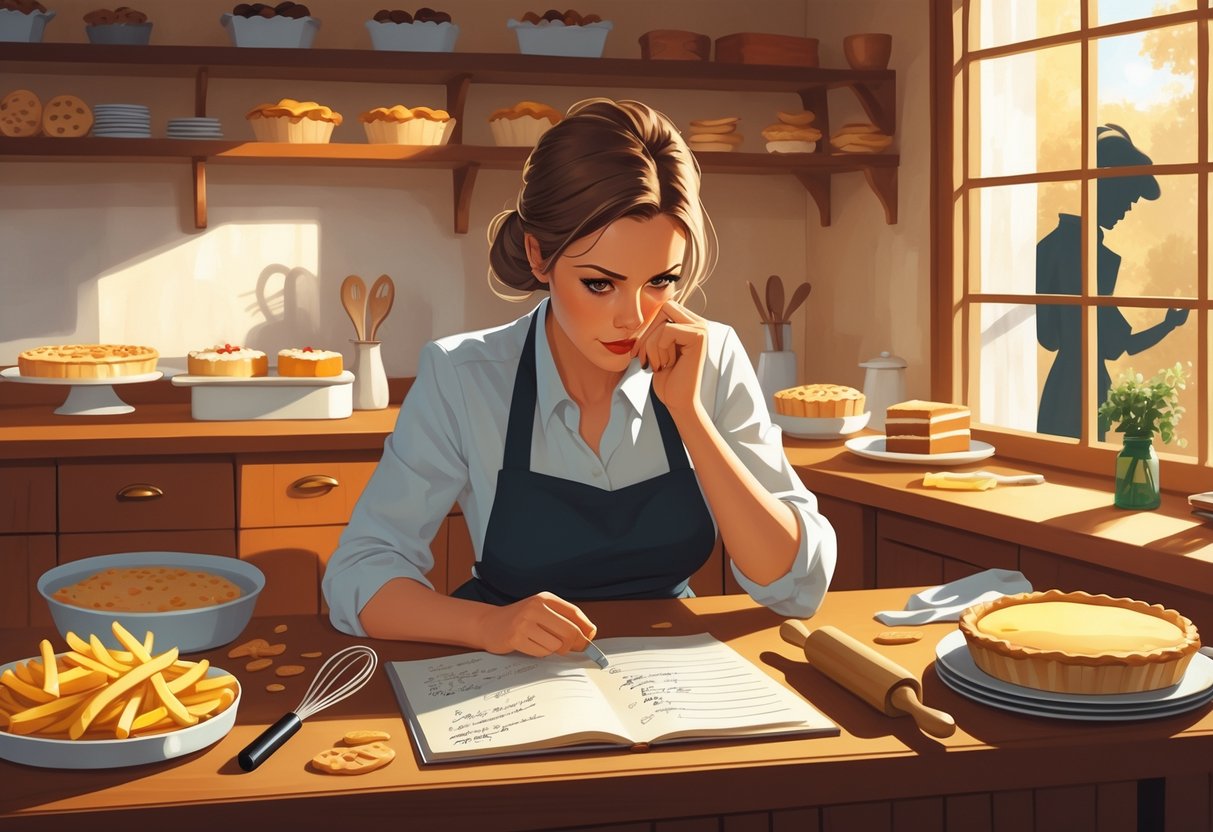
Joanne Fluke’s Hannah Swensen Mystery series brings together amateur sleuthing and baking in a small-town Minnesota setting. The series, which started with Chocolate Chip Cookie Murder, features red-haired baker Hannah Swensen who runs The Cookie Jar bakery while solving crimes in Lake Eden.
Each book combines murder mysteries with recipes readers can try at home. Hannah’s tart personality matches her gingersnaps, and her investigative skills often put her ahead of local law enforcement.
The series has grown to over 30 books since its launch. Five novels were adapted into television films for the Hallmark Movies & Mysteries channel under the title Murder, She Baked, starring Alison Sweeney as Hannah Swensen.
Fluke writes under the pen name as one of author Joanne Fischmann’s identities. The books appeal to readers who enjoy cozy mysteries with culinary elements. The combination of baking details and mystery plots creates an accessible entry point for those new to the cozy mystery genre.
3) The Cackleberry Club Mysteries by Laura Childs
Laura Childs brings readers to the small Midwest town of Kindred, where three women in their forties run the egg-themed Cackleberry Club café. Suzanne, Toni, and Petra serve breakfast specialties while solving murders that disrupt their community.
The series combines culinary elements with classic cozy mystery tropes. The café specializes in egg dishes, from Egg Strata to creative preparations with playful names. Beyond the kitchen, the establishment includes a book nook and yarn shop, creating a multi-faceted business setting.
These mysteries follow a familiar pattern where amateur sleuths balance their business operations with criminal investigations. The protagonists encounter crimes ranging from mayoral candidates shot with crossbows to various murders that threaten their peaceful café.
The books appeal to readers who enjoy food-centered mysteries with mature protagonists. Childs has written multiple installments in this New York Times bestselling series. Each story delivers breakfast fare alongside mystery-solving adventures, making it suitable for fans seeking cozy mysteries with culinary details.
4) Sadie Hoffmiller Bakery Mysteries by Maddie Day
This series features an incorrect attribution. The Sadie Hoffmiller Culinary Mystery series is written by Josi S. Kilpack, not Maddie Day. These are two separate authors with distinct mystery series.
Josi S. Kilpack created the Sadie Hoffmiller character, a retired widow and homemaker who lives in Colorado. Sadie is a baking enthusiast and culinary expert who finds herself solving crimes while pursuing her passion for cooking. The series started in 2009 and includes 13 books.
Each mystery takes Sadie to different locations, though her home base remains in Colorado. She is characterized as smart and spunky, spending her time cooking, gardening, and observing her surroundings. The books blend recipes with mystery plots, offering readers both entertainment and culinary inspiration.
Maddie Day is a pen name used by Edith Maxwell, who writes entirely different cozy mystery series. These include the Country Store Mysteries featuring Robbie Jordan and her Pans ‘N Pancakes restaurant, as well as the Cozy Capers Book Group Mysteries set on Cape Cod.
5) The Cat Who Could Read Backwards by Lilian Jackson Braun
Lilian Jackson Braun launched her beloved Cat Who series in 1966 with this cozy mystery that introduced journalist Jim Qwilleran and his perceptive Siamese cat, Koko. The story takes place in the world of modern art, where Qwilleran investigates suspicious events while working as an art critic.
While this book focuses more on the art world than culinary themes, food does appear throughout the narrative. Qwilleran frequently dines at various restaurants during his investigation, and these meals punctuate the story’s progression. The book earned critical acclaim upon its release, with The New York Times naming Braun “the new detective of the year” in 1966.
The series became known for featuring increasingly prominent food elements in later installments. Readers meet memorable characters and witness the unique bond between Qwilleran and Koko, whose seemingly supernatural abilities to detect clues drive the mystery forward.
Braun published two more novels by 1968 before mysteriously disappearing from publishing for 18 years. The series later returned and expanded to 29 books, cementing its place in cozy mystery tradition.
6) A Catered Murder by Isis Crawford
Isis Crawford launches her Mystery with Recipes series with this engaging culinary cozy that introduces sisters Bernadette and Libby Simmons. Bernie returns to New York after leaving her cheating boyfriend in L.A. and joins her sister Libby at their catering business, A Little Taste of Heaven.
The sisters find themselves investigating a murder at a Dracula-themed high school reunion they’re catering. The combination of family dynamics, small business operations, and amateur sleuthing creates an accessible entry point for readers new to culinary mysteries.
Crawford draws on her background running a catering service, which adds authenticity to the food-focused elements. The book includes seven recipes readers can prepare at home. Publishers Weekly noted the novel’s naturally flowing narrative and clever wordplay distinguish it from typical cozy mysteries.
The character-driven plot balances the mystery investigation with the realistic challenges of managing a catering business. Both sisters bring different strengths to their partnership, creating an effective detective duo while maintaining their individual personalities throughout the story.
7) The Tea Shop Mysteries by Laura Childs
Laura Childs brings Charleston’s Historic Peninsula to life through Theodosia Browning, owner of the Indigo Tea Shop. This New York Times bestselling series blends cozy mysteries with Southern charm and tea culture.
Theodosia splits her time between crafting perfect tea blends and solving murders that disrupt her charming Charleston community. The series features events like the annual Isle of Palms Yacht Race, where social gatherings turn deadly and require her investigative skills.
Each book delivers a standalone mystery while developing the recurring characters throughout the series. Readers follow Theodosia through tea-infused adventures that combine whodunit plots with detailed explorations of tea varieties, brewing techniques, and Southern hospitality.
The series appeals to fans of culinary mysteries, tea enthusiasts, and anyone who enjoys character-driven stories set against historic backdrops. Childs, who previously worked as a marketing firm CEO and screenwriter, also writes the Scrapbook Mysteries and Cackleberry Club Mysteries series. The Tea Shop Mysteries currently spans multiple books, offering substantial content for readers seeking lighthearted mystery entertainment with beverage-focused settings.
8) The Dixie Hemingway Culinary Mysteries by Laura Bradford
The Dixie Hemingway series does not appear to be written by Laura Bradford. The mysteries featuring pet sitter Dixie Hemingway were created by Blaize Clement and later continued by John Clement following Blaize’s passing.
Laura Bradford is known for writing several cozy mystery series under her own name and the pen name Elizabeth Lynn Casey. Her works include the Amish Mysteries, Southern Sewing Circle Mysteries, Emergency Dessert Squad Mysteries, and A Friend For Hire Mysteries. The Emergency Dessert Squad Mysteries particularly appeals to food enthusiasts with its culinary focus.
The Dixie Hemingway series centers on a former Florida sheriff’s deputy turned pet sitter who solves crimes while caring for animals. The series began with “Curiosity Killed the Cat Sitter” and includes eleven books total. While these mysteries offer engaging whodunit plots, they focus primarily on pet sitting rather than culinary themes.
Readers seeking Laura Bradford’s food-focused mysteries should explore her Emergency Dessert Squad series instead, which combines detective work with dessert-making in a way that truly satisfies both mystery and foodie interests.
9) Kitchen Conspiracy by Ellery Adams
Ellery Adams brings her signature cozy mystery style to the culinary world through her various food-centered series. This New York Times bestselling author has crafted multiple mystery collections that interweave cooking, community, and crime-solving.
Adams writes under several names and has penned over 50 novels in the cozy mystery genre. Her approach combines traditional mystery elements with culinary details that appeal to food enthusiasts. The author grew up near Long Island Sound, and her coastal upbringing often influences the settings of her stories.
Her “Books by the Bay Mysteries” and “Charmed Pie Shoppe Mysteries” incorporate magical elements alongside food themes. These series explore character development and interpersonal relationships while maintaining focus on culinary arts. The Secret, Book & Scone Society represents another popular series in her bibliography.
Adams also collaborated with Sylvia May under the pseudonym Lucy Arlington to create “A Novel Mystery Series.” Her work consistently features protagonists who solve crimes while navigating their passion for food, whether through restaurants, bakeries, or other culinary settings.
10) The Secret, Book & Scone Society by Ellery Adams
Ellery Adams launches this cozy mystery series with a story that centers on four women in a small North Carolina town who bond over books and baked goods. The protagonist operates a bookstore café, making scones a recurring culinary element throughout the narrative.
The women form their secret society to share their hidden pasts and support one another. When a murder occurs in their town, they use their collective strengths to investigate the crime. Their meetings revolve around literary discussions paired with freshly baked scones and tea.
Adams, a New York Times bestselling author, has written over forty mystery novels across multiple series. This particular series blends the appeal of book club dynamics with traditional mystery elements. The scone recipes and café atmosphere provide the food-related content that appeals to culinary mystery readers.
The series offers eight books in total, giving readers substantial material to explore. The first book establishes the group’s formation and sets the tone for subsequent installments. Adams focuses on character development and community connections rather than elaborate culinary descriptions, making the food elements complementary rather than central to the plot.
Defining Culinary Mysteries
Culinary mysteries blend traditional whodunit elements with the world of food, where amateur sleuths solve crimes while working in kitchens, restaurants, or food-related professions. These stories feature poisoned dishes, suspicious ingredients, and clues hidden in recipes.
Key Elements of the Genre
The protagonist typically works as a chef, baker, café owner, restaurant critic, food blogger, or caterer. This professional connection to food drives both the narrative and the investigation. Amateur detection remains central, with characters stumbling into murders rather than seeking them out professionally.
Core characteristics include:
- A close-knit community setting where everyone knows each other
- Light-hearted tone despite the murder plot
- Strong emphasis on food descriptions and culinary details
- Real recipes often included within the pages
- Food-related clues or murder methods
The kitchen serves as the heart of both story and mystery. Rumors surface during meal preparations, tempers flare over burnt dishes, and secrets emerge alongside dinner service. Settings range from noodle shops and bakeries to barbecue cook-offs and upscale restaurants.
Evolution of Food-Themed Whodunits
Rex Stout’s Nero Wolfe character established early precedent for gourmet detectives in mystery fiction. This gourmand detective demonstrated how food appreciation could enhance character development and plot complexity.
The genre expanded significantly in recent decades as cozy mysteries gained mainstream popularity. Publishers recognized reader appetite for stories combining culinary escapades with crime-solving. Food descriptions became increasingly detailed, transforming from background elements into integral plot devices.
Modern culinary mysteries now form a distinct subgenre with dedicated readership. Screen adaptations have further popularized these stories, creating new audiences beyond traditional mystery fans. The fusion of cooking scenes with investigation sequences offers dual appeal to both foodies and mystery enthusiasts.
The Intersection of Cuisine and Suspense
Food serves as more than backdrop in culinary mysteries—it functions as a narrative device that reveals character motivations, establishes community connections, and provides critical clues. The kitchen becomes a natural gathering place where tensions simmer alongside sauces and secrets emerge between courses.
How Culinary Details Enhance the Plot
Culinary elements in mysteries operate on multiple levels to advance the story. A missing ingredient can signal tampering, while a character’s food preferences reveal personality traits and potential motives. Recipe modifications might hide poison, and kitchen accidents can mask deliberate harm.
The technical aspects of cooking provide natural opportunities for misdirection. A chef’s knowledge of food chemistry, timing requirements, and ingredient interactions creates plausible scenarios for both murders and their solutions. Dishes served at specific temperatures or containing particular allergens become weapons in the hands of clever killers.
Food also establishes setting and atmosphere in ways other details cannot. A bustling restaurant kitchen creates urgency and chaos where mistakes happen easily. A bakery’s pre-dawn hours offer isolated moments for crime. These culinary spaces naturally bring diverse characters together—staff, suppliers, customers, and competitors—each with distinct access and opportunity.
Notable Culinary Sleuths and Signatures
Amateur sleuths in this subgenre typically work as:
- Professional chefs who solve crimes between restaurant services
- Bakery owners investigating murders in small-town settings
- Caterers encountering suspicious deaths at events
- Food critics uncovering deadly secrets during reviews
- Cooking show contestants dealing with competitive sabotage
These protagonists possess specialized knowledge that aids investigations. A pastry chef recognizes unusual baking techniques. A sommelier detects foreign substances in wine. A food truck operator knows the ins and outs of local health codes and vendor rivalries.
Their culinary expertise provides both credibility and access. Restaurant owners hear gossip from regular customers. Caterers enter private homes and exclusive events. Food bloggers maintain networks of industry contacts who share information freely.