Cats dominate the cozy mystery genre as sidekicks, appearing alongside amateur sleuths in countless beloved series from Lilian Jackson Braun’s “The Cat Who” mysteries to Miranda James’s “Cat in the Stacks” books. These feline companions have evolved from simple pets into integral characters who actively participate in solving crimes, offering everything from comic relief to crucial clues that crack cases wide open.
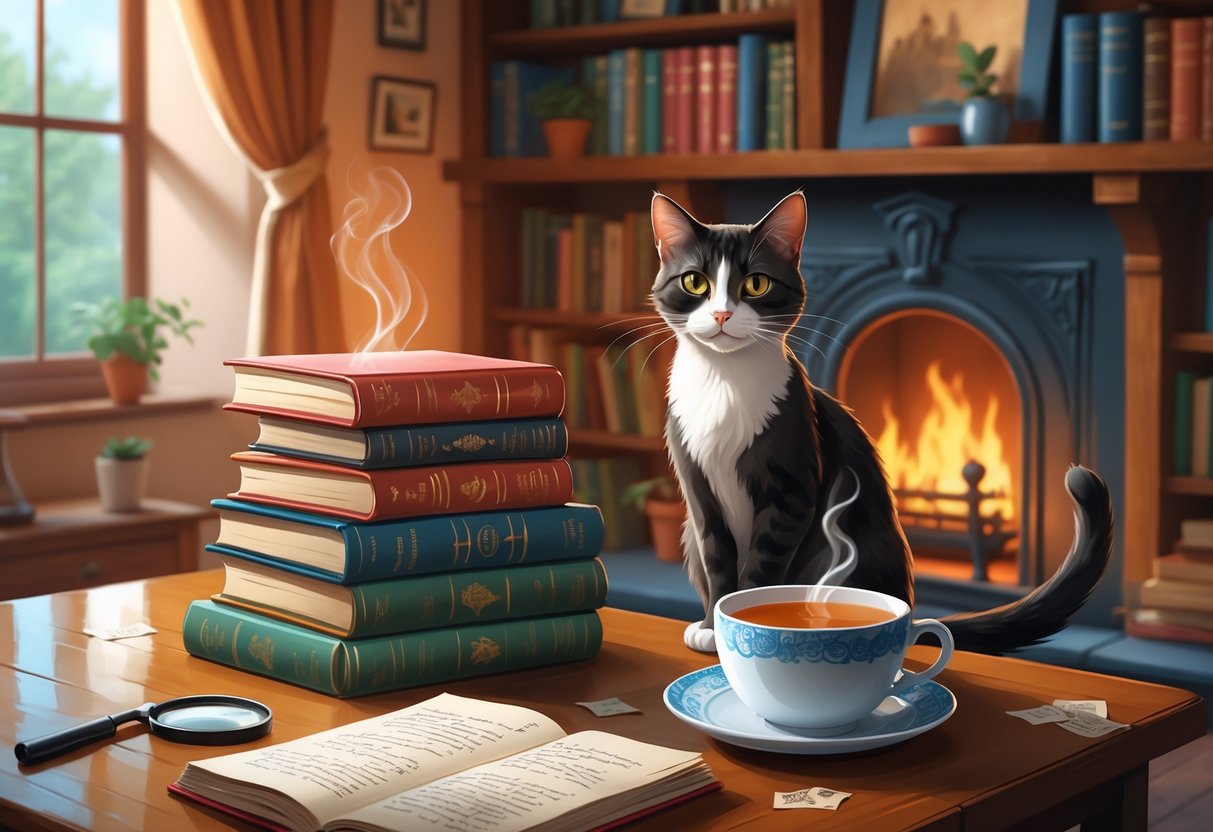
Cats make ideal mystery sidekicks because their natural curiosity, stealth, and independent nature mirror the qualities of effective detectives, while their ability to access spaces humans cannot reach often leads to breakthrough discoveries. Their mysterious personalities and heightened senses allow them to notice details that human characters might miss, creating realistic opportunities for plot advancement that feels organic rather than forced.
The popularity of cat sidekicks extends beyond their detective abilities to encompass their storytelling value, with authors using these characters as sounding boards for human protagonists to work through clues aloud and as sources of humor through witty internal monologues or magical talking abilities. Understanding why cats have claimed this special place in cozy mysteries reveals much about both the genre’s appeal and the enduring bond between humans and their feline companions.
Grab 50 Story Starter Prompts — fresh ideas for fiction, memoir, and creative nonfiction.
The Essential Role of Cats in Cozy Mysteries
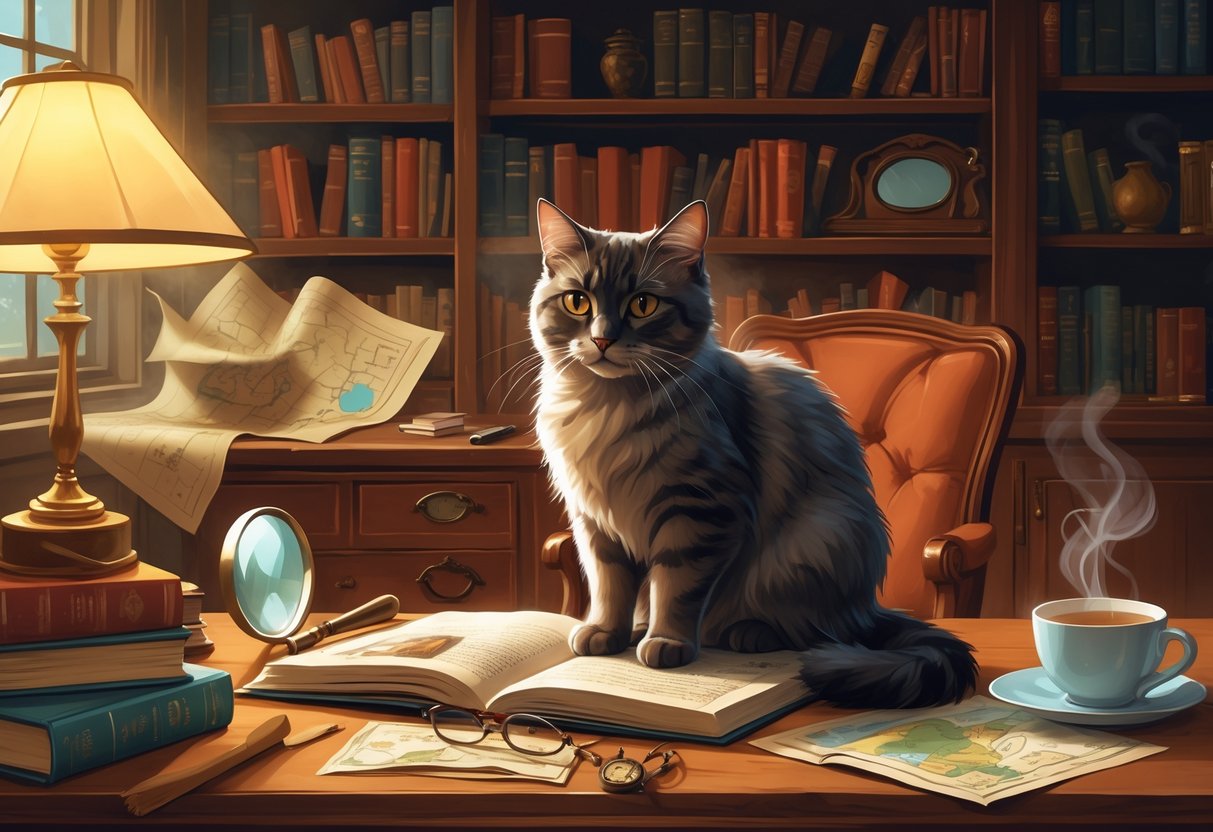
Cats serve multiple functions within the cozy mystery genre, from captivating readers through their enigmatic nature to providing comfort and enhancing the amateur sleuth’s investigative abilities. These furry companions have become essential elements that define the cozy mystery experience.
Why Cats Capture Readers’ Imaginations
Cats possess natural qualities that align perfectly with mystery storytelling. Their mysterious and independent nature makes them living enigmas that embody the intrigue central to cozy mysteries.
Key traits that fascinate readers:
- Silent movement and keen observation skills
- Seemingly superior intelligence
- Unpredictable behaviors that suggest hidden knowledge
Readers connect with cats because they appear to know more than they reveal. This quality mirrors the puzzle-solving nature of the cozy mystery genre itself.
Many cat owners spend considerable time trying to understand their pets’ thoughts and motivations. This universal experience creates an instant bond between readers and feline characters in mysteries.
The inquisitive and stealthy nature of cats makes them natural detectives. They never hesitate to investigate dangerous situations, qualities that translate seamlessly into mystery narratives.
Cats as Symbols of Whimsy and Comfort
Cats provide essential comfort elements that define the cozy mystery atmosphere. They create a sense of security and permanence that readers associate with the genre’s appeal.
Furry companions offer readers emotional anchoring points within stories. The presence of a beloved cat suggests stability and warmth, counterbalancing darker mystery elements.
Comfort factors cats provide:
- Permanence – Long-lived characters that span multiple books
- Trust – People instinctively trust individuals who care for animals
- Humor – Witty personalities when given voice or perspective chapters
Cats add whimsical elements through their often snarky, confident personalities. When portrayed with the ability to communicate, they frequently display superior attitudes toward humans, creating entertaining dynamics.
The bond between humans and cats represents the cozy mystery’s emphasis on relationships and community connections rather than violence or darkness.
Cats Enhancing Amateur Sleuth Dynamics
Cats significantly improve the amateur sleuth’s investigative capabilities through both practical and narrative functions. They provide unique advantages that human detectives cannot access alone.
Investigative advantages:
- Access to spaces humans cannot reach
- Heightened senses for detecting clues
- Ability to observe without raising suspicion
Many amateur sleuth stories feature cats who point their human partners toward important leads. The cat’s superior intellect often guides the human detective in the right direction when cases stagnate.
Cats serve as excellent sounding boards for human characters to discuss clues aloud. This technique allows authors to share information with readers naturally without awkward internal monologue passages.
The cozy mystery genre benefits from cats taking active roles in investigations. Some stories dedicate entire chapters to feline perspectives, allowing cats to conduct independent detective work that complements their human partners’ efforts.
Storytelling Benefits of Cat Sidekicks
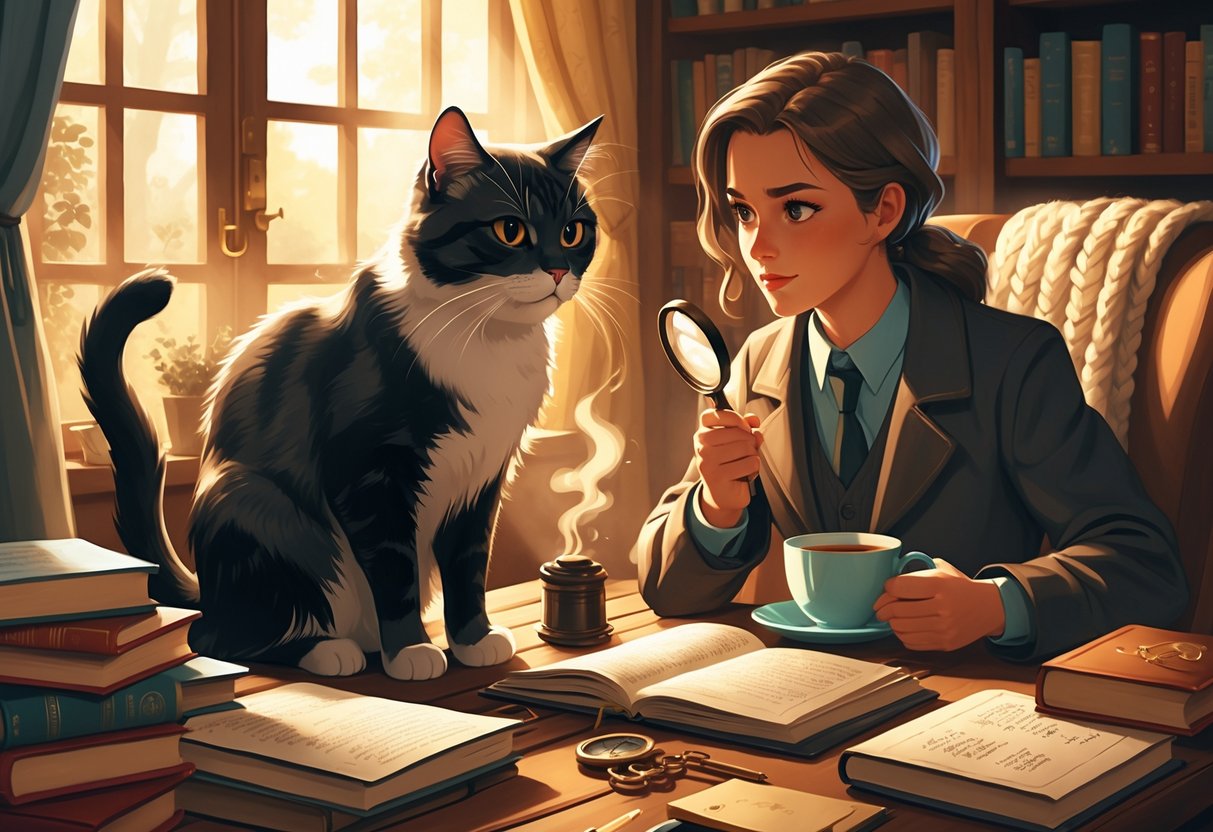
Cats offer unique narrative advantages that enhance cozy mystery plots through emotional connections, comedic timing, and investigative contributions. These furry companions serve multiple storytelling functions that strengthen reader engagement and plot development.
Providing Emotional Depth and Relatability
Cat sidekicks create immediate emotional bonds between readers and characters. Many readers own cats and understand the daily interactions between humans and their feline companions. This connection makes stories feel authentic and grounded.
Authors use cats to reveal character traits through how protagonists interact with their pets. A detective who shares breakfast with their cat shows nurturing qualities. One who discusses case details with their feline demonstrates vulnerability.
Key emotional functions include:
- Providing comfort during stressful investigations
- Offering unconditional companionship to isolated sleuths
- Creating opportunities for character development
- Establishing domestic stability in chaotic mysteries
The human-cat relationship adds warmth to potentially dark subject matter. Readers connect with protagonists who show genuine care for their pets. This emotional foundation makes characters more three-dimensional and memorable.
Offering Comic Relief and Lighthearted Moments
Cats naturally provide humor through their confident personalities and unpredictable behavior. Their independence often creates amusing situations that break tension in cozy mystery narratives.
Feline characters can display snarky attitudes or superior demeanors that contrast with human confusion. A cat’s reaction to a suspect might be more telling than lengthy dialogue. Their timing often creates perfect comedic moments.
Common sources of cat-based humor:
- Interrupting serious conversations with demands for attention
- Knocking over evidence or important documents
- Showing obvious dislike for suspicious characters
- Performing dramatic behaviors at inappropriate times
These lighter moments balance the serious nature of mystery solving. Readers appreciate breaks from tension that don’t detract from the main plot. Cat antics feel natural rather than forced.
Acting as Plot Drivers and Clue Finders
Cats advance mystery plots through their natural behaviors and keen senses. Their ability to access small spaces and move silently makes them excellent scouts. They notice details humans might miss.
Feline sidekicks can discover hidden objects, follow suspicious characters, or alert owners to danger. Their reactions to people often signal trustworthiness or deception. A cat’s refusal to approach someone becomes a clue itself.
Plot advancement techniques:
- Leading characters to crime scenes or evidence
- Detecting sounds or smells humans cannot perceive
- Accessing restricted areas through windows or vents
- Providing alibis or timeline information through their presence
These contributions feel realistic because they align with actual cat abilities. Readers accept feline involvement without suspending disbelief. The mystery benefits from additional investigative perspectives that complement human reasoning.
Popular Cat-Focused Cozy Mystery Series
Several established series have helped cement cats as essential characters in cozy mysteries, featuring both magical abilities and traditional detective work. These works showcase iconic feline personalities that have captured readers’ attention for decades.
Beloved Titles Featuring Feline Sidekicks
The Cat Who Series by Lilian Jackson Braun remains one of the most enduring cat mystery franchises. The series spans twenty-nine books featuring Siamese cats Koko and Yum Yum alongside reporter Jim Qwilleran.
Koko’s distinctive ear-piercing meows signal important clues. Yum Yum provides additional investigative support through her keen observations.
Magical Cats Mystery Series by Sofie Kelly combines librarian Kathleen Paulson with cats Hercules and Owen in Mayville Heights, Minnesota. The cats possess special abilities that aid in solving crimes.
Cat in the Stacks by Miranda James features librarian Charlie Harris and his Maine Coon cat Diesel. Set in Athena, Mississippi, the series blends southern charm with classic whodunit mysteries.
The Mrs. Murphy Mysteries by Rita Mae Brown showcases three animal sleuths: cats Mrs. Murphy and Pewter, plus Tee Tucker the Corgi. They assist Mary Minor “Harry” Haristeen in Virginia’s Blue Ridge Mountains.
Iconic Cat Characters in the Genre
Midnight Louie from Carole Nelson Douglas’s series stands out as a hard-boiled feline detective. The black tomcat operates in Las Vegas while maintaining cozy mystery sensibilities.
His snarky personality and street-smart approach differentiate him from other cozy cats. Louie’s thoughts appear throughout chapters as he helps PR freelancer Temple Barr.
Joe Grey from Shirley Rousseau Murphy’s series takes center stage as the primary investigator. Most action unfolds from Joe’s perspective in the seaside village of Molena Point, California.
These cats demonstrate character growth throughout their respective series. Their personalities evolve alongside their human companions, creating deeper reader connections.
Frank, the talking library cat, represents newer trends in the genre. His witty dialogue and superior attitude exemplify the confident feline archetype.
Impact of Series Like Amanda Flower’s Works
Amanda Flower’s Magical Bookshop Mystery Series contributes to the growing intersection between cats and literary settings. Her work demonstrates how contemporary authors expand traditional cozy mystery formulas.
The series combines bookstore settings with feline companions. This pairing appeals to readers who appreciate both literary themes and animal sidekicks.
Flower’s approach influences newer authors entering the cozy mystery field. Her success shows publishers the continued market demand for cat-centered mysteries.
Modern series often incorporate magical elements alongside traditional detective work. This evolution keeps the subgenre fresh while maintaining classic cozy appeal.
The popularity of established series creates opportunities for new authors. Publishers actively seek cat-focused cozy mysteries due to proven reader interest.
Cat Sidekicks Versus Other Animal Companions
While dogs and other animals appear in cozy mysteries, cats possess distinct characteristics that make them particularly effective as furry companions. Their independent nature and observational skills create unique storytelling opportunities that differ from traditional loyal pets.
Comparing Cats and Dogs in Mysteries
Dogs in cozy mysteries typically serve as loyal, protective companions who alert their owners to danger. They follow commands and provide emotional support through their unwavering devotion. Golden retrievers and beagles frequently appear as dependable sidekicks who bark at intruders or comfort distressed characters.
Cats operate differently in these stories. They choose when to help and often appear at crime scenes independently. Feline sidekicks observe situations from hidden vantages and make discoveries through their natural curiosity rather than trained behavior.
The cat’s selective affection creates more dynamic relationships. Dogs typically love everyone, but cats form specific bonds with certain characters. This selectivity adds tension when a cat refuses to approach a suspect or suddenly becomes hostile toward someone previously trusted.
Mystery writers use these behavioral differences strategically. Dogs provide straightforward emotional beats, while cats introduce unpredictability that can drive plot development.
Unique Advantages of Feline Sidekicks
Cats access spaces that humans and dogs cannot reach easily. They slip through windows, hide in small alcoves, and climb to elevated positions where evidence might be concealed. Their size allows them to witness conversations without being noticed.
Silent movement gives cats investigative advantages. They observe suspects without alerting them, unlike dogs that might bark or make noise. This stealth capability makes them natural surveillance partners for amateur sleuths.
The independent streak of cats creates compelling story moments. When a typically aloof cat suddenly seeks attention or acts distressed, readers understand something significant has occurred. Their selective behavior becomes a communication method that adds mystery layers.
Cats also provide comic relief through their judgmental expressions and dismissive attitudes toward human concerns. They knock over evidence, ignore important clues, or demand attention at crucial investigation moments, adding levity to darker plot elements.
Developing Memorable Feline Characters
Successful feline sidekicks require distinct personalities that resonate with readers and thoughtful consideration of supernatural elements. These furry companions must feel authentic while serving the cozy mystery genre’s storytelling needs.
Creating Distinct Personalities for Fictional Cats
Writers should develop cats with specific traits that distinguish them from typical pet portrayals. Real cat behaviors provide the foundation for compelling characters.
Independent yet loyal cats work well in mysteries. They maintain feline autonomy while showing devotion to their human partners. This balance creates realistic relationship dynamics.
Confidence and superiority define many successful mystery cats. These traits translate into snarky, witty personalities that add humor to investigations. Cats naturally project self-assurance.
Physical characteristics should match personality traits:
| Personality Type | Physical Traits | Behavior Patterns |
|---|---|---|
| Clever observer | Alert ears, bright eyes | Perches in high places |
| Mischievous helper | Sleek build, quick movements | Gets into tight spaces |
| Protective companion | Larger frame, steady gaze | Follows owner closely |
Writers can give cats specific quirks or habits. One might knock objects off tables to reveal hidden clues. Another could have favorite hiding spots that become plot devices.
Balancing Magic and Realism in Cat Portrayals
Talking cats require careful handling to maintain cozy mystery authenticity. The supernatural element should enhance rather than overshadow the mystery plot.
Some cats communicate through actions rather than speech. They guide humans to evidence or react to suspicious characters. This approach preserves mystery atmosphere while showcasing feline intelligence.
Magical abilities work best when limited and specific. A cat might sense danger or detect lies, but shouldn’t solve entire cases independently. Human-cat collaboration creates stronger narratives.
Writers should establish clear rules for supernatural elements. If cats can talk, determine who hears them and when. Consistency prevents reader confusion and maintains story credibility.
Non-magical cats can still demonstrate remarkable intelligence through realistic behaviors. They notice details humans miss and react to environmental changes that signal danger or deception.
The Enduring Appeal of Cats in Cozy Mysteries
Cats have established themselves as essential elements in the cozy mystery genre through their ability to create lasting connections with readers and their status as recognizable cultural symbols. These feline companions drive reader loyalty while representing deeper themes that resonate throughout mystery fiction.
Boosting Reader Engagement and Loyalty
Cats create powerful emotional bonds between readers and cozy mystery series. Pet owners particularly connect with feline characters because they mirror real relationships people have with their cats. This emotional investment keeps readers returning to follow both the human protagonists and their cat companions through multiple books.
The interactive nature of cats in mysteries enhances reader engagement. Many cozy mystery series feature cats that communicate through various means, whether through magical abilities or intuitive behavior. This gives readers a sense that the cats are active participants rather than passive observers.
Key engagement factors include:
- Emotional attachment to recurring feline characters
- Anticipation of cat-driven plot developments
- Connection to pet ownership experiences
- Comfort and familiarity across series installments
Cats also serve as reliable constants in cozy mystery series. While human characters may change locations or circumstances, the feline companion provides continuity that readers can depend on.
Cats as Cultural Icons in the Genre
Cats occupy a unique position in mystery fiction due to their historical associations with the supernatural and mysterious. Their connection to magic, witches, and the paranormal makes them natural fits for cozy mysteries that incorporate mystical elements. This cultural background allows authors to introduce magical abilities or enhanced intuition without breaking reader suspension of disbelief.
The archetype of the clever, observant cat has become a genre staple. Readers expect certain personality traits from mystery cats: confidence, wit, and a somewhat superior attitude toward humans. These characteristics align perfectly with the cozy mystery tradition of amateur sleuths and quirky supporting characters.
Cultural significance includes:
- Mystical heritage: Long-standing associations with magic and folklore
- Intelligence perception: Cats viewed as naturally clever and observant
- Stealth capabilities: Perfect for gathering information undetected
- Independent nature: Matches the self-reliant spirit of cozy mystery protagonists
Popular cozy mystery series have solidified cats as genre icons. Series like The Cat Who… mysteries and Magical Cats Mystery series have demonstrated the commercial success of feline-centered stories.